



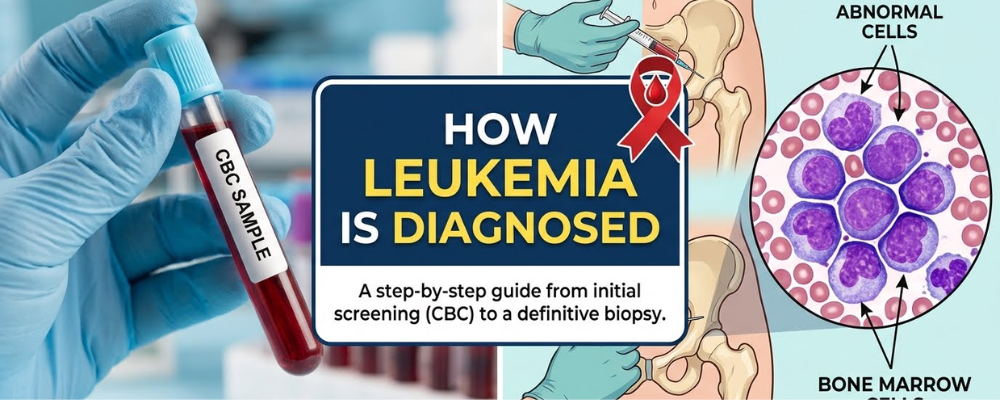
Medical Review Disclosure
This content has been reviewed for medical accuracy. Always consult a qualified healthcare professional before making any medical decisions. [Last reviewed: 2026-05-18]
Leukemia is a type of blood cancer that begins in the bone marrow, where blood cells are produced. Because leukemia affects blood-forming cells, doctors use several specialized tests to diagnose the disease, identify the leukemia type, and determine the best treatment plan.
Early diagnosis is extremely important because some types of leukemia can progress rapidly. Modern diagnostic techniques now allow doctors to detect leukemia earlier and more accurately than ever before.
In this guide, we’ll explain how leukemia is diagnosed—from initial blood tests to bone marrow biopsy—in simple and easy-to-understand language.
Why Diagnosing Leukemia Early Matters
Leukemia symptoms are often similar to common illnesses, such as:
- Flu
- Anemia
- Viral infections
Because of this, leukemia may go unnoticed in the early stages.
Early diagnosis helps:
- Start treatment sooner
- Prevent complications
- Improve treatment success
- Identify the exact leukemia subtype
Different types of leukemia require different treatment approaches, so accurate diagnosis is essential.
When Doctors Suspect Leukemia
Doctors may suspect leukemia if a person has symptoms such as:
- Persistent fatigue
- Frequent infections
- Fever or night sweats
- Easy bruising or bleeding
- Swollen lymph nodes
- Bone or joint pain
- Unexplained weight loss
In some cases, leukemia is discovered during routine blood work before symptoms appear.
Step 1: Medical History and Physical Examination
The diagnostic process usually starts with a medical evaluation.
What Doctors Check
Doctors ask about:
- Symptoms
- Duration of illness
- Family history
- Exposure to chemicals or radiation
- Previous cancer treatments
During the physical exam, doctors may look for:
- Pale skin (anemia)
- Swollen lymph nodes
- Enlarged spleen or liver
- Signs of infection or bleeding
These findings may suggest a blood disorder like leukemia.
Step 2: Blood Tests for Leukemia
Blood tests are often the first major step in diagnosing leukemia.
Complete Blood Count (CBC)
A Complete Blood Count (CBC) measures:
- Red blood cells
- White blood cells
- Platelets
Abnormal Results May Show:
- Very high white blood cell counts
- Low red blood cells (anemia)
- Low platelet counts
These abnormalities can indicate leukemia or other blood disorders.
Peripheral Blood Smear
A blood smear allows doctors to examine blood cells under a microscope.
This Test Helps Detect:
- Abnormal leukemia cells
- Immature white blood cells (blasts)
- Changes in blood cell shape or size
In acute leukemia, large numbers of blast cells may appear in the blood.
Additional Blood Tests
Doctors may also perform tests to evaluate:
- Liver function
- Kidney function
- Clotting ability
- Uric acid levels
These tests help assess overall health before treatment begins.
Step 3: Bone Marrow Biopsy and Aspiration
What Is a Bone Marrow Biopsy?
A bone marrow biopsy is one of the most important tests used to confirm leukemia.
Because leukemia begins in the bone marrow, doctors need to directly examine marrow tissue to:
- Confirm the diagnosis
- Identify the leukemia type
- Determine how advanced it is
How the Procedure Is Done
The procedure is usually performed on the:
Hip Bone (Pelvis)
Two Samples Are Typically Taken:
Bone Marrow Aspiration
Removes liquid marrow using a needle.
Bone Marrow Biopsy
Removes a small piece of bone marrow tissue.
Local anesthesia is used to reduce pain.
Step 4: Genetic and Molecular Testing
Common Genetic Abnormalities
Philadelphia Chromosome
Common in:
- Chronic Myeloid Leukemia (CML)
- Some Acute Lymphocytic Leukemia (ALL) cases
FLT3 Mutation
Often seen in Acute Myeloid Leukemia (AML).
IDH Mutations
Important for targeted treatment decisions in AML.
Modern leukemia diagnosis now includes advanced molecular testing.
Why Genetic Testing Is Important
Leukemia cells often contain specific genetic abnormalities that help:
- Identify the leukemia subtype
- Predict prognosis
- Guide targeted therapy choices
Types of Molecular Tests
Cytogenetic Testing
Examines chromosomes for abnormalities.
FISH Testing (Fluorescence In Situ Hybridization)
Detects specific genetic changes.
PCR Testing
Looks for tiny amounts of leukemia-related mutations.
Next-Generation Sequencing (NGS)
Provides detailed mutation analysis.
These tests play a major role in precision medicine.
Step 5: Imaging Tests
Leukemia does not usually form solid tumors, but imaging tests may still be useful.
Imaging May Include:
- CT scan
- MRI
- PET scan
- Chest X-ray
These tests help evaluate:
- Enlarged organs
- Lymph node involvement
- Infection complications
Step 6: Lumbar Puncture (Spinal Tap)
In some leukemia types, especially ALL, doctors may check whether leukemia has spread to the:
Central Nervous System (CNS)
How It Works
A small amount of cerebrospinal fluid (CSF) is removed from the lower back using a needle.
The fluid is tested for leukemia cells.
How Leukemia Type Is Determined
After testing, doctors classify leukemia based on:
- Cell type (myeloid or lymphoid)
- Speed of progression (acute or chronic)
- Genetic mutations
- Molecular markers
This helps determine whether the patient has:
- AML
- CML
- ALL
- CLL
Correct classification is critical because treatment differs significantly between types.
Staging in Leukemia
Unlike solid tumors, leukemia does not use traditional staging systems in all cases.
However, doctors may assess:
- Blood counts
- Organ involvement
- Genetic risk factors
- Bone marrow infiltration
Certain leukemias like CLL use special staging systems such as:
- Rai staging
- Binet staging
Why Molecular Diagnosis Is Changing Leukemia Care
Modern leukemia care increasingly relies on:
Precision Medicine
This means treatments are chosen based on:
- Specific mutations
- Molecular characteristics
- Individual patient factors
This approach helps:
- Improve treatment outcomes
- Reduce unnecessary toxicity
- Personalize therapy plans
What Happens After Diagnosis?
Once leukemia is confirmed, doctors develop a treatment plan based on:
- Leukemia subtype
- Patient age and health
- Mutation profile
- Disease severity
Treatment may include:
- Chemotherapy
- Targeted therapy
- Immunotherapy
- Stem cell transplant
Conclusion
Diagnosing leukemia involves several important steps, from blood tests to bone marrow biopsy and advanced genetic testing. These tests not only confirm the diagnosis but also help doctors understand the exact type of leukemia and the best treatment approach.
Advances in molecular testing and precision medicine are making leukemia diagnosis more accurate and personalized, leading to better outcomes for many patients.
Early evaluation of symptoms and timely testing remain critical for successful treatment.
FAQs
1. What is the first test used to diagnose leukemia?
A complete blood count (CBC) is usually the first test.
2. Is a bone marrow biopsy necessary?
Yes, it is often required to confirm leukemia and determine the subtype.
3. Can leukemia be diagnosed with a blood test alone?
Blood tests may strongly suggest leukemia, but bone marrow testing is usually needed for confirmation.
4. What do genetic tests show in leukemia?
They identify mutations that help guide treatment and prognosis.
5. Is leukemia diagnosis painful?
Most tests are minimally painful, though bone marrow biopsy may cause temporary discomfort.
References
- Mayo Clinic – Leukemia Diagnosis & Treatment
https://www.mayoclinic.org/diseases-conditions/leukemia/diagnosis-treatment/drc-20374378 - Cleveland Clinic – Leukemia Overview
https://my.clevelandclinic.org/health/diseases/4365-leukemia - Columbia University Cancer Center – Leukemia Diagnosis
https://www.cancer.columbia.edu/cancer-types-care/types/leukemia/leukemia-diagnosis-and-staging - MD Anderson Cancer Center – Leukemia Diagnosis
https://www.mdanderson.org/cancer-types/leukemia/leukemia-diagnosis.html
Medical Disclaimer
This content is for informational purposes only and should not replace professional medical advice, diagnosis, or treatment. Always consult a qualified healthcare provider regarding any symptoms, medical concerns, or treatment decisions.
Related: View all cancer medicine medications
Dr. Sophie Reynolds
Last reviewed: 2026-05-18