



Medical Review Disclosure
This content has been reviewed for medical accuracy. Always consult a qualified healthcare professional before making any medical decisions. [Last reviewed: 2026-06-19]
In the past, a lung cancer diagnosis usually meant that aggressive chemotherapy had to begin immediately. Though chemotherapy still plays a very important role in the treatment of cancer, it's an instrument with a broad scope of action.
In simple terms, chemotherapy destroys both cancerous and other rapidly dividing healthy cells, which leads to numerous side effects, such as hair loss, nausea, and immune system problems.
With the advent of precision medicine, it became possible to change the treatment paradigm for the better. Now oncologists can investigate the genetic code of each cancerous tumor and find a special treatment for it, sparing other tissues from damage.
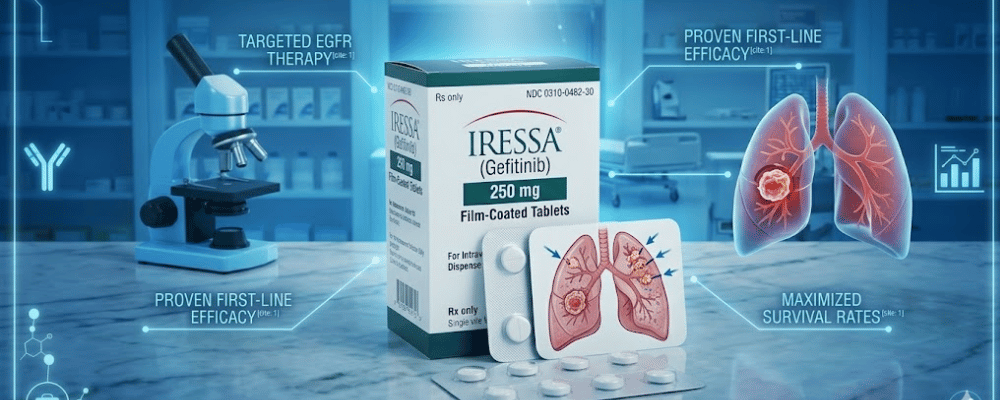
One of the pioneers in this field is Iressa, developed by AstraZeneca. As one of the first tyrosine kinase inhibitors (TKIs), Iressa still stays a popular choice for certain patients with lung cancer.
The following complete guide covers everything you need to know about Iressa, including the principles of its work, eligibility, pricing, and managing side effects.
Mechanism of Action: How Iressa Targets Cancer Cells
Unlike conventional chemotherapy drugs, Iressa is a targeted biological drug referred to as the EGFR Tyrosine Kinase Inhibitor.
This means that while most chemotherapeutic agents kill any cell that divides, Iressa targets the presence of specific genes in the tumor itself.
What is an EGFR Mutation?
Most instances of non-small cell lung cancer (NSCLC), which is the most prevalent type of lung cancer, occur due to the activation of a protein known as EGFR. Normally, in a cell, the activity of EGFR is controlled by being turned on and off.
In lung cancer, the DNA that codes for the receptor becomes mutated. Most mutations involve either an exon 19 deletion or an exon 21 L858R substitution.
Such a mutation leads to EGFR being constantly turned on in a cell. Consequently, the cell continuously gets orders to multiply and form tumors.
The Tyrosine Kinase Inhibitor Blockade
The Iressa molecule is specifically designed to enter the cancer cell and bind with the intracellular tyrosine kinase domain of the EGFR receptor, which makes it impossible for adenosine triphosphate to bind to the receptor and supply the energy needed to send growth signals.
Once this mechanism is interrupted, the unending "grow" message becomes quiet and the cancer cells no longer divide, thus stopping the tumor’s growth and causing programmed cell death (apoptosis).
Clinical Indications: Who Benefits Most from Iressa?
Iressa is not prescribed for all individuals with lung cancer. In accordance with the guidelines set forth by international medical authorities, the use of Iressa as a first-line treatment for metastatic or advanced NSCLC patients who have certain EGFR exon 19 deletions or exon 21 (L858R) substitution mutations is recommended.
The Necessity of Biomarker Testing
Before an oncologist administers Iressa, he or she must conduct a special test in the laboratory, either from the tissue taken from the tumor (tumor biopsy) or using the liquid biopsy method (blood test to detect circulating tumor DNA). This test screens for the EGFR mutation as a biomarker.
Studies prove that if there is no such biomarker in the tumor, the medication will not work. In contrast, those people who have this mutation benefit from administering an oral TKI like Iressa as a first-line treatment, as the objective response rate is much higher than when undergoing chemotherapy.
How Iressa is Administered: Dosage and Best Practices
One of the primary benefits of Iressa is its convenience. It is an oral medication that can be taken at home, eliminating the need for frequent, hours-long hospital visits required for intravenous (IV) infusions.
- Dose: The recommended adult dose is one 250-mg tablet per day.
- Take Regularly: Take Iressa at the same time each day, either with or without food. Swallow the entire tablet with a glass of water.
- Advice If You Have Problems Swallowing: Avoid crushing the tablet in your mouth. Place the entire tablet into a half-glass of still water and stir occasionally for around 15 minutes until it dissolves. Swallow the mixture immediately, then rinse the glass with an additional half-glass of water and swallow the second glassful as well to ensure complete intake of the medication.
- Guidelines When Taking a Missed Dose: Take the missed dose as soon as you realize you have forgotten about it, but if less than 12 hours remain before your next regular dose, do not take the missed dose. Never take a double dose.
- Important Drug Interactions: Iressa works by using the acid produced in your stomach for it to dissolve and be absorbed into the blood system. This means that any drug which reduces stomach acid, such as PPI drugs like omeprazole, will greatly decrease the effect of Iressa and must not be used. However, if you must use acid reducers, you can discuss with your medical team how to take Iressa 12 hours apart from PPI or 6 hours away from antacids.
Cost, Access, and Availability
Iressa is an oncology drug, and therefore, handling the financial side of treatment may be difficult for some families. The real cost of Iressa depends on many factors, including the place you live, your insurance and whether you use brand or generic Iressa.
The Global Cost Landscape
The initial cost of the brand-name Iressa drug was above several thousand dollars per month. With the patents expired in the past ten years, high-quality generic drugs for gefitinib became readily available.
Thus, the cost of Iressa treatment was greatly reduced, which makes this treatment available for many more people.
Regional Availability: Focus on the Philippines
For patients navigating cancer care in Southeast Asia, accessing Iressa Philippines channels involves a structured process:
- Regulatory Status: Iressa (Gefitinib 250 mg) is fully registered and approved by the Philippine Food and Drug Administration (PFDA) and requires a prescription from a licensed medical oncologist.
- Navigating the Price Landscape: Brand-name Iressa can cost upwards of ₱60,000 to ₱90,000 for a month's supply (30 tablets) through standard retail hospital pharmacies. To manage this cost, high-quality generic gefitinib is available through specialized oncology pharmacies in Metro Manila and major regional hubs, lowering the monthly cost down substantially.
- Financial Assistance Programs: Filipino patients can often apply for the PhilHealth Z-Benefit Package for lung cancer to help offset diagnostic and therapeutic expenses. Furthermore, patient access initiatives and compassionate use programs managed directly by pharmaceutical foundations can help eligible families secure subsidized or discounted medication.
Side Effect Profiles and Safety Information
While Iressa does not cause the severe hair loss or extreme nausea associated with chemotherapy, it has a unique side effect profile that requires careful monitoring.
Common, Manageable Side Effects
Most side effects are mild to moderate and typically appear within the first month of starting therapy. They include:
- Skin Reactions (Dermatitis): An acne-like skin rash often develops on the face, head, and upper torso. The skin may also become dry, red, and intensely itchy.
- Diarrhea: This is common but can usually be managed effectively with over-the-counter anti-diarrheal medications like loperamide.
- Nail Changes: The skin around fingernails and toenails may become red, swollen, and painful (paronychia).
- Mild Eye Disorders: Conjunctivitis, dry eyes, or abnormal eyelash growth can occur.
Rare but Serious Adverse Events
While uncommon, certain systemic adverse events necessitate urgent medical intervention:
- Interstitial Lung Disease (ILD): It is an uncommon but potentially fatal condition characterized by inflammation of deeper structures of the lungs. Please contact your care provider immediately if you experience sudden onset of symptoms such as cough, shortness of breath, or fever.
- Hepatotoxicity (Liver Toxicity): Iressa has the potential to increase liver enzymes (ALT/AST). Your oncologist will perform regular tests to check your liver function before and during treatment.
Gastrointestinal Perforation: Uncommon risk of development of a hole in the wall of the stomach or intestines.
Why Iressa Remains a Reliable Choice
Despite the emergence of more advanced EGFR inhibitors in the market, Iressa still continues to stand out as an excellent option for use.
The medication has a proven track record of safety for many decades, which means that medical experts understand how to deal with the side effects.
To millions of people around the world, it is an excellent treatment option that helps fight lung cancer from home.
Frequently Asked Questions
1. How long does Iressa continue to work?
Many patients experience long-term disease control on Iressa, often lasting for many months or years. Over time, however, cancer cells can develop new mutations (such as the T790M resistance mutation) that cause them to become resistant to first-generation drugs. If this occurs, your oncologist will switch you to a next-generation EGFR inhibitor or alternative therapy.
2. Can I take antacids while on Iressa?
Standard antacids (like calcium carbonate or sodium bicarbonate) can interfere with Iressa absorption. If you must take them, ensure you take the antacid at least 6 hours before or 6 hours after your daily Iressa dose.
3. Is Iressa considered chemotherapy?
No, Iressa is a targeted therapy. Traditional chemotherapy attacks all rapidly dividing cells throughout the body, whereas Iressa specifically blocks the internal signaling pathways of cancer cells expressing the mutated EGFR protein.
References
- US Food and Drug Administration (FDA): Iressa (Gefitinib) Official Prescribing Label Data
- European Medicines Agency (EMA): Iressa EPAR Product Information and Evaluation
- Cancer Research UK: Gefitinib (Iressa) Patient Guide & Side Effects
- National Institutes of Health (PubMed): Clinical Trial Outcomes of Gefitinib in NSCLC (PMID: 14748652)
- Drugs.com: History of Iressa Approval and Regulatory Timeline
Medical Disclaimer: The information provided in this article is for educational and informational purposes only. It is not intended to substitute for professional medical advice, diagnosis, or treatment. Always seek the advice of an oncologist or other qualified healthcare providers with any questions you may have regarding a cancer diagnosis or treatment plan.
Related: View all lung cancer medications
Dr. Sophie Reynolds
Last reviewed: 2026-06-19