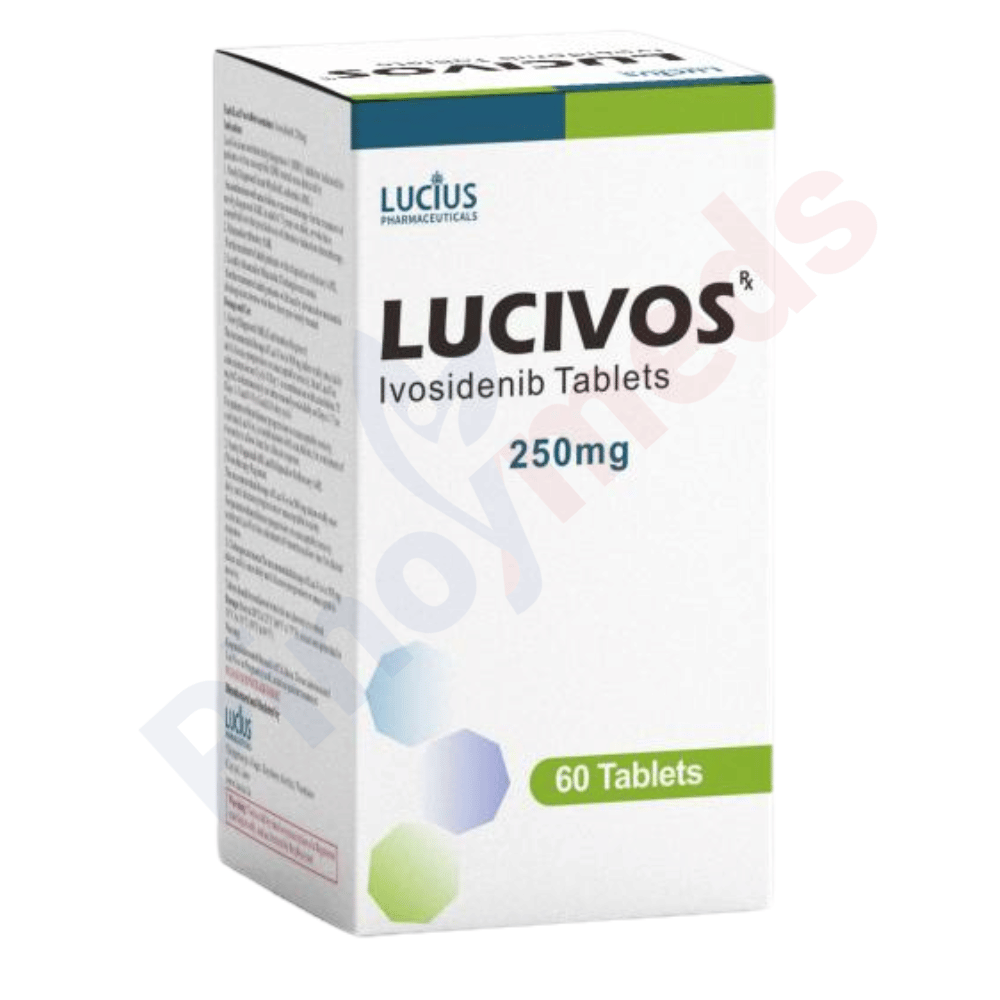
Lucivos 250 mg Tablet

Prescription Required

Brand Name:

Lucivos

Molecule:

Ivosidenib

Strength:

250 mg

Quantity:

60 Tablets

Form:

Tablet

Packaging Type:

Bottle

Manufacturer/Marketed By:

Lucius Pharma

Country of Origin:

Laos

Categories: ,

Out of stock

Similar Products:

ProductManufacturer / Marketed ByPrice
Tibsovo 250 mg TabletServier Ask for Price
Ivosenib 250 mg TabletEverest Pharma 80,000.00

Description

Lucivos 250 mg Tablet - Detailed Product Information

Lucivos 250 mg Tablet is listed on pinoymeds.ph with detailed information to support careful product review before purchase. This page is designed for informed readers who compare product scope, practical usage context, handling expectations, and ordering workflow in one place. The content below is educational and operational in nature and should not replace clinical diagnosis, direct physician advice, or individualized treatment planning.

Existing product note: LuciVos 500 mg Tablet is a once-daily, oral precision oncology treatment that contains ivosidenib, a first-in-class inhibitor of isocitrate dehydrogenase-1 (IDH1).  This medication is specifically designed for patients with cancers harboring a susceptible IDH1 mutation, which plays a crucial role in promoting abnormal cell metabolism and inhibiting normal cell maturation. LuciVos directly targets the mutant IDH1 enzyme, which is found in various aggressive cancers, including acute myeloid leukemia (AML) and cholangiocarcinoma (also known as bile duct cancer).  By correcting the underlying metabolic disturbance caused by this mutation, LuciVos helps to restore the natural process of cellular differentiation, transforming immature cancer cells into mature, functioning blood or tissue cells. This targeted approach makes LuciVos an integral part of personalized cancer therapy, offering both

Product identity and verification: Confirm product name, concentration or strength, dosage form, pack size, and supplier details before order finalization. Cross-check labels, invoices, and prescribing instructions so ordering records remain accurate across teams and care settings.

Intended usage context: Products in this category are generally used within supervised healthcare workflows. Use should align with prescription intent, clinical eligibility, and local regulation. Where institutional protocols exist, follow those protocols first and document exceptions with responsible clinician approval.

Professional supervision expectations: Product administration decisions should be made by licensed professionals who can review patient-specific history, potential interactions, and contraindication considerations. Independent unsupervised use is discouraged for products requiring clinical oversight.

Dose planning and scheduling discipline: Respect prescribed timing and quantity instructions. Maintain a clear administration log where needed, especially in long-course therapy. Structured logging helps continuity between shifts, tele-consult follow-up, and audit readiness in regulated environments.

Storage and handling fundamentals: Keep products in recommended environmental conditions and away from contamination risks. Confirm storage ranges, humidity sensitivity, and light exposure guidance from the label or package insert. Do not use compromised packaging or uncertain chain-of-custody stock.

Supply continuity and reorder planning: Estimate consumption windows conservatively and reorder early enough to avoid therapy interruptions. For clinical programs or dependent repeat buyers, maintain a rolling buffer strategy and assign ownership for reorder reminders and stock-level checks.

Dispensing communication quality: Provide clear, plain-language instructions and reinforce key safety points at handover. Good counseling includes use schedule, what to monitor, what to avoid, and when to escalate. Repeat-back style communication improves comprehension and adherence outcomes.

Adherence and follow-through management: Strong outcomes often depend on consistent use patterns and practical follow-up. Build routines around reminders, check-ins, and documented milestone reviews. Where adherence barriers exist, address cost, logistics, and understanding gaps proactively.

Safety monitoring and escalation path: If unusual effects, non-response, or tolerance concerns appear, escalate promptly to qualified clinicians. Preserve chronology of events, recent product history, and relevant co-therapy details to accelerate safe decision-making during review.

Quality assurance and documentation standards: Keep records for procurement source, batch identifiers where available, date of receipt, and dispense trail. Reliable documentation supports pharmacovigilance, internal quality systems, and accountable customer support operations.

Compatibility with broader care plans: Product usage should fit into an integrated treatment strategy rather than isolated action. Encourage coordinated review with diagnostic status, current care objectives, and realistic follow-up cadence to reduce fragmentation risks.

Customer support and service operations: For availability checks, timeline commitments, and fulfillment support, contact the support team before checkout completion. Early coordination helps align substitutions, quantity planning, and delivery expectations with real operational capacity.

Responsible information boundaries: Product pages provide structured guidance, not definitive clinical directives. Users should avoid self-adjusting treatment plans based solely on listing text. Final therapeutic decisions belong to licensed clinicians with full case context.

Post-purchase handling and review cycle: After receipt, confirm product condition, correctness, and labeling immediately. Report discrepancies quickly. In ongoing therapy contexts, schedule periodic review so therapy quality, tolerability, and plan fit remain continuously validated.

Product identity and verification: Confirm product name, concentration or strength, dosage form, pack size, and supplier details before order finalization. Cross-check labels, invoices, and prescribing instructions so ordering records remain accurate across teams and care settings.

Intended usage context: Products in this category are generally used within supervised healthcare workflows. Use should align with prescription intent, clinical eligibility, and local regulation. Where institutional protocols exist, follow those protocols first and document exceptions with responsible clinician approval.

Professional supervision expectations: Product administration decisions should be made by licensed professionals who can review patient-specific history, potential interactions, and contraindication considerations. Independent unsupervised use is discouraged for products requiring clinical oversight.

Dose planning and scheduling discipline: Respect prescribed timing and quantity instructions. Maintain a clear administration log where needed, especially in long-course therapy. Structured logging helps continuity between shifts, tele-consult follow-up, and audit readiness in regulated environments.

Storage and handling fundamentals: Keep products in recommended environmental conditions and away from contamination risks. Confirm storage ranges, humidity sensitivity, and light exposure guidance from the label or package insert. Do not use compromised packaging or uncertain chain-of-custody stock.

Supply continuity and reorder planning: Estimate consumption windows conservatively and reorder early enough to avoid therapy interruptions. For clinical programs or dependent repeat buyers, maintain a rolling buffer strategy and assign ownership for reorder reminders and stock-level checks.

Dispensing communication quality: Provide clear, plain-language instructions and reinforce key safety points at handover. Good counseling includes use schedule, what to monitor, what to avoid, and when to escalate. Repeat-back style communication improves comprehension and adherence outcomes.

Adherence and follow-through management: Strong outcomes often depend on consistent use patterns and practical follow-up. Build routines around reminders, check-ins, and documented milestone reviews. Where adherence barriers exist, address cost, logistics, and understanding gaps proactively.

Safety monitoring and escalation path: If unusual effects, non-response, or tolerance concerns appear, escalate promptly to qualified clinicians. Preserve chronology of events, recent product history, and relevant co-therapy details to accelerate safe decision-making during review.

Quality assurance and documentation standards: Keep records for procurement source, batch identifiers where available, date of receipt, and dispense trail. Reliable documentation supports pharmacovigilance, internal quality systems, and accountable customer support operations.

Important: This information is for product understanding and operational planning only. Always use medicines and related products under guidance from qualified healthcare professionals.

Benefits

Molecular Precision

  • LuciVos selectively inhibits the mutant IDH1 enzyme, reducing levels of the harmful oncometabolite 2-hydroxyglutarate (2-HG).
  • This restores regular gene expression, enabling cancer cells to resume differentiation and helping reduce tumor burden without the need for broadly toxic chemotherapy.

Versatile Treatment Options

  • Approved for use as monotherapy in relapsed or refractory AML and in patients ineligible for intensive chemotherapy.
  • It can also be used in combination with azacitidine for the treatment of newly diagnosed AML, offering a flexible, less-intensive treatment pathway.

Oral, Once-Daily Dosing

  • Administered as a single oral tablet per day, LuciVos offers convenience, independence, and ease of use, which is especially important for elderly or outpatient cancer patients.
  • Supports home-based treatment, which can reduce hospital visits and improve long-term therapy adherence.

Clinically Proven Results

  • Demonstrated improved overall survival and remission rates in multiple clinical trials for AML.
  • The ClarIDHy trial also showed that LuciVos significantly improves progression-free survival in patients with previously treated IDH1-mutated cholangiocarcinoma.

How it Works

LuciVos (ivosidenib) is a targeted cancer therapy that works by inhibiting the activity of mutant isocitrate dehydrogenase-1 (IDH1), a genetic mutation found in several types of cancer, including acute myeloid leukemia (AML) and cholangiocarcinoma.

In its mutated form, IDH1 produces an abnormal metabolite called 2-hydroxyglutarate (2-HG). Excessive 2-HG disrupts normal cellular functions by:

  • Blocking gene expression pathways that are necessary for healthy cell differentiation.
  • Promoting an environment where immature cells remain “stuck” in a cancerous, proliferative state.

LuciVos Restores Normal Cell Function by:

  • Inhibiting mutant IDH1 activity, thereby reducing the buildup of 2-HG.
  • Reactivating normal cellular maturation, allowing cancer cells to develop into healthy, non-proliferative cells.
  • Enabling the body’s natural mechanisms to control or eliminate cancerous cells is a therapeutic strategy known as differentiation therapy.

This mode of action differs from traditional chemotherapy, as it corrects the underlying cause of disease without broadly killing rapidly dividing cells, thereby reducing systemic toxicity.

Dosage & Administration

LuciVos should be prescribed and supervised by a healthcare provider with experience in treating cancers associated with IDH1 mutations. Genetic testing is required before initiating treatment.

For Newly Diagnosed AML (Ineligible for Intensive Chemotherapy)

Combination Regimen with Azacitidine:

  • LuciVos Dose: 500 mg orally once daily (two 250 mg tablets), starting Cycle 1, Day 1.
  • Azacitidine Dose: 75 mg/m² subcutaneously or intravenously:

    • Administered on Days 1–7 of each 28-day cycle
    • Alternate dosing schedule: Days 1–5 and 8–9, as clinically appropriate

Duration:

  • Continue both LuciVos and azacitidine for a minimum of 6 months, even in the absence of immediate clinical improvement.
  • Treatment should continue until disease progression or the development of unacceptable side effects.

Monotherapy Regimen

Applicable for:

  • Newly diagnosed AML patients not receiving combination therapy
  • Relapsed or refractory AML patients who have received prior treatment
  • Dose: 500 mg orally once daily
  • Administration: With or without food; take at the same time each day
  • Duration: Continue treatment as long as clinical benefit is observed and no intolerable toxicity occurs

Side Effects

Like all targeted cancer therapies, LuciVos (ivosidenib) may cause side effects. While many are manageable, some may be serious and require immediate medical attention.

Common Side Effects (≥10% of patients)

These effects are typically mild to moderate and may improve over time or with supportive care:

  • Fatigue – General tiredness or lack of energy
  • Nausea – Occasional stomach upset
  • Diarrhea or Constipation – Digestive irregularities
  • Cough – Usually dry and non-productive

These symptoms should be reported if they persist or interfere with daily activities.

 Serious Side Effects (<10% of patients)

These are less common but potentially life-threatening. Early detection and management are critical:

Differentiation Syndrome

  • Caused by the rapid maturation of cancer cells
  • Symptoms: Fever, shortness of breath, rapid weight gain, fluid retention, low blood pressure
  • Treatment: Requires immediate corticosteroid therapy and possible interruption of LuciVos

QT Interval Prolongation

  • A change in heart rhythm that can lead to arrhythmia
  • Symptoms: Dizziness, fainting, palpitations
  • Monitoring: Regular electrocardiograms (ECGs) are required

Electrolyte and Liver Abnormalities

  • LuciVos can lower blood levels of potassium and magnesium, and increase liver enzymes (AST, ALT)
  • Monitoring: Frequent blood tests are essential for early detection and dose adjustment
  • Always report unusual or persistent side effects to your healthcare provider promptly.

Warning and Precaution

To ensure safe and effective treatment with LuciVos (ivosidenib), patients and healthcare providers should adhere to the following precautions:

Genetic Requirement

  • Mandatory IDH1 Mutation Testing: LuciVos is effective only in cancers driven by a mutant IDH1 gene. A validated diagnostic test must confirm this mutation before initiating therapy.

Monitoring Requirements

  • Electrocardiograms (ECG):

    • Perform at baseline, on Days 8 and 15 of Cycle 1, and periodically throughout treatment to monitor for QT interval prolongation, which may signal heart rhythm abnormalities.
  • Laboratory Monitoring:

    • Regular blood tests are necessary to evaluate electrolyte balance (including potassium, magnesium, and calcium), liver function (as indicated by AST, ALT, and bilirubin levels), and complete blood counts (CBC).
    • Adjustments to treatment may be needed based on results.

Drug Interactions

  • Avoid using potent CYP3A4 inhibitors or inducers, such as:

    • Inhibitors: Itraconazole, clarithromycin
    • Inducers: Rifampin, phenytoin
  • These can significantly alter ivosidenib levels, increasing toxicity risk or reducing effectiveness.
  • Always inform your healthcare provider of all medications, supplements, or herbal products you are taking.

Pregnancy & Breastfeeding

  • Pregnancy Warning: LuciVos may harm an unborn baby. Use effective contraception during therapy and for at least 1 month after the final dose.
  • Breastfeeding: Avoid during treatment and for at least 1 week after stopping due to the potential for drug transfer through breast milk.

Patient Guidance

Proper storage ensures the safety and effectiveness of LuciVos:

  • Store at 20°C to 25°C (68°F to 77°F) in a cool, dry place. Avoid excessive heat and humidity.
  • Keep tablets in their original container with the desiccant packet. Do not transfer to other containers.
  • Do not use tablets that are broken, chipped, or discolored.
  • Do not flush unused tablets. Use a pharmacy take-back program or follow your pharmacist’s instructions for safe disposal.
  • Keep out of reach of children and pets.
  • Never share your medication, even with someone who has similar symptoms.

Clinical Trial & Approvals

Ivosidenib has been rigorously studied and approved based on key clinical trial data:

Acute Myeloid Leukemia (AML)

  • FDA Approval (2018): For relapsed or refractory IDH1-mutant AML
  • FDA Expansion (2019): For newly diagnosed AML patients ineligible for intensive chemotherapy, in combination with azacitidine
  • Evidence: AGILE and earlier studies demonstrated improved remission rates, overall survival, and tolerability in elderly and frail patients

Cholangiocarcinoma

  • FDA Approval (2021): For previously treated, IDH1-mutant locally advanced or metastatic cholangiocarcinoma
  • Evidence: The ClarIDHy Phase 3 trial showed significantly better progression-free survival and a favorable trend in overall survival versus placebo

FAQ

Who is eligible for LuciVos treatment?+
How should I take LuciVos?+
What if I miss a dose of LuciVos?+
What are the common side effects of LuciVos?+
Can LuciVos interact with other medications?+
Can I drink alcohol while taking LuciVos?+

Related Products

Related Posts:

No matching posts found.

0 reviews
0
0
0
0
0

There are no reviews yet.

Be the first to review “Lucivos 250 mg Tablet”

Your email address will not be published. Required fields are marked *