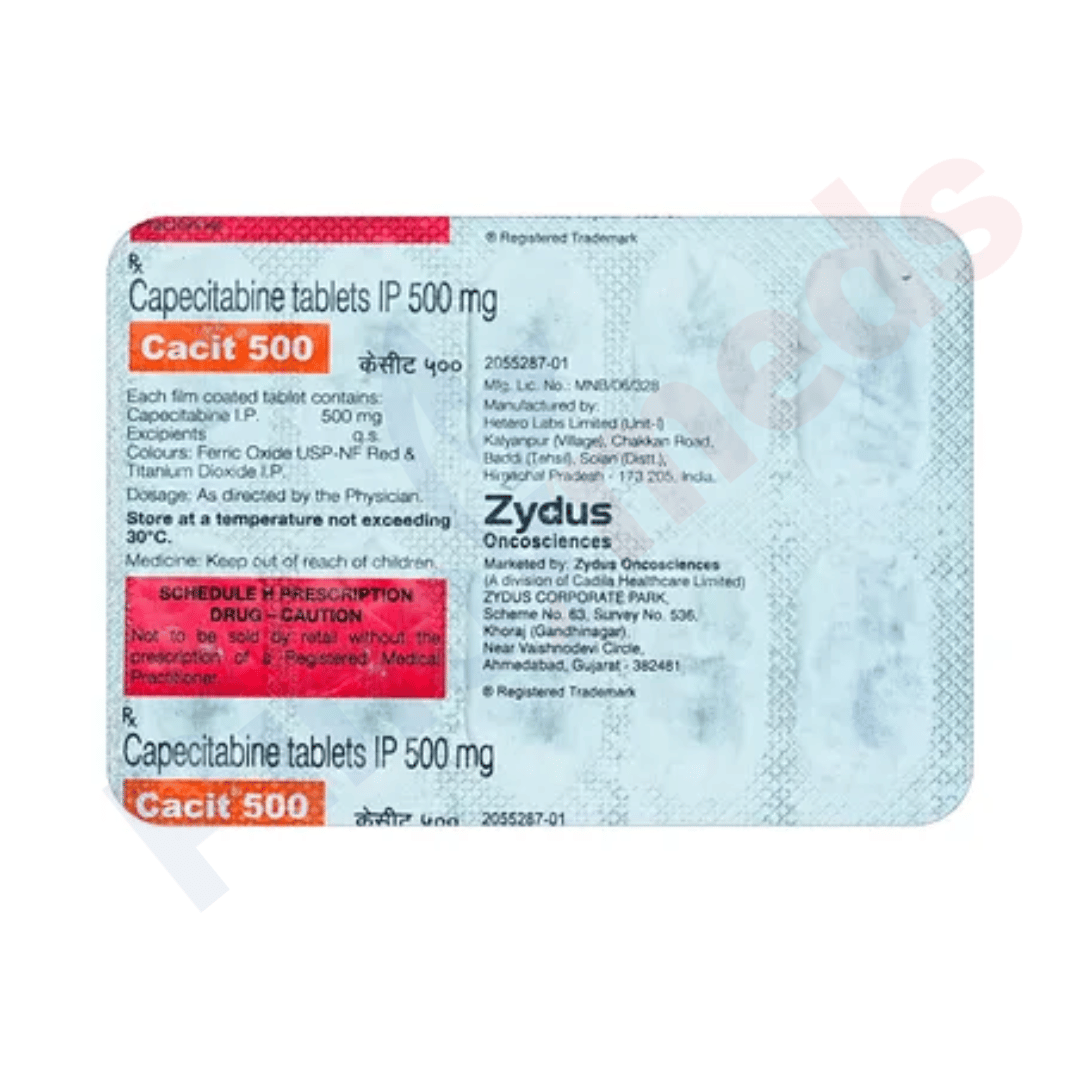
Cacit 500 mg Tablet

Prescription Required

Brand Name:

Cacit

Molecule:

Capecitabine

Strength:

500 mg

Quantity:

90 Tablets

Form:

Tablet

Packaging Type:

Strips

Manufacturer/Marketed By:

Zydus

Country of Origin:

India

Description

Cacit 500 mg Tablet contains Capecitabine 500 mg, a prescription anticancer medicine manufactured by Zydus Lifesciences Ltd. (formerly Zydus Cadila). It belongs to a class of medicines known as fluoropyrimidine antimetabolites, which interfere with the growth and multiplication of cancer cells. After oral administration, Capecitabine is converted inside the body into 5-fluorouracil (5-FU), an active anticancer agent that helps slow or stop the growth of rapidly dividing cancer cells.

Cacit 500 mg Tablet is used in the treatment of several types of cancer, including colorectal cancer, colon cancer, rectal cancer, breast cancer, and certain cases of gastric (stomach) cancer, either as a single therapy or in combination with other anticancer medicines. The choice of treatment depends on the type and stage of cancer, previous therapies, and the patient's overall health. Treatment should always be initiated and supervised by an oncologist experienced in cancer chemotherapy.

Unlike intravenous 5-fluorouracil, Capecitabine is administered orally, providing patients with a convenient treatment option that can often be taken at home while remaining under regular medical supervision. Once absorbed, the medicine undergoes enzymatic conversion in the liver and tumor tissues to form 5-fluorouracil, which interferes with DNA and RNA synthesis in cancer cells. This targeted activation helps inhibit tumor growth and may reduce exposure of healthy tissues compared with direct systemic administration of 5-fluorouracil.

The dosage of Cacit 500 mg Tablet is individualized according to the patient's body surface area (BSA), cancer type, treatment regimen, kidney function, and overall clinical condition. The medicine is usually taken within 30 minutes after a meal, and patients should follow their prescribed dosing schedule carefully. Regular monitoring of blood counts, liver function, kidney function, and treatment response is essential throughout therapy. Dose adjustments or temporary treatment interruption may be required if significant side effects occur.

Common side effects of Cacit include diarrhea, nausea, vomiting, abdominal pain, fatigue, loss of appetite, hand-foot syndrome (palmar-plantar erythrodysesthesia), mouth sores, and decreased blood cell counts. Serious complications such as severe diarrhea, dehydration, infection, cardiotoxicity, or severe skin reactions require immediate medical attention. Patients should promptly report persistent fever, unusual bleeding, chest pain, or severe gastrointestinal symptoms to their healthcare provider.

Before starting Cacit 500 mg Tablet, patients should inform their healthcare provider about any history of liver disease, kidney disease, heart disease, dihydropyrimidine dehydrogenase (DPD) deficiency, or other significant medical conditions. It is also important to discuss all prescription medicines, over-the-counter drugs, vitamins, and herbal supplements, as Capecitabine may interact with certain medications, including anticoagulants such as warfarin. Women who are pregnant, planning to become pregnant, or breastfeeding should consult their healthcare provider before starting treatment, as Capecitabine may cause harm to the developing fetus.

At Pinoymeds, we are committed to providing reliable, evidence-based information about specialty medicines to help patients and caregivers make informed healthcare decisions. If you have been prescribed Cacit 500 mg Tablet (Capecitabine), consult your oncologist or healthcare provider for personalized guidance regarding its appropriate use, dosage, monitoring requirements, and ongoing treatment.

Benefits

Cacit 500 mg Tablet contains Capecitabine, an oral chemotherapy medicine used to treat several types of cancer. It is converted into the active anticancer agent 5-fluorouracil (5-FU) within the body, where it interferes with the growth and division of cancer cells. Depending on the type and stage of cancer, Cacit may be used alone or in combination with other anticancer medicines as part of a comprehensive treatment plan.

Treatment with Cacit 500 mg Tablet may provide the following clinical benefits:

  • Helps slow the growth and spread of cancer cells.
  • Used in the treatment of colorectal cancer, colon cancer, rectal cancer, breast cancer, and selected cases of gastric (stomach) cancer.
  • May be prescribed as adjuvant therapy after surgery to help reduce the risk of cancer recurrence in eligible patients.
  • Can be used as first-line or subsequent treatment depending on the cancer type, stage, and previous therapies.
  • Oral tablet formulation offers a convenient alternative to intravenous 5-fluorouracil (5-FU) in appropriate patients.
  • May be used in combination with other chemotherapy agents, targeted therapies, or biological medicines to improve treatment outcomes.
  • Supported by international clinical studies and oncology treatment guidelines for approved indications.

The benefits of Cacit 500 mg Tablet vary depending on the patient’s diagnosis, stage of disease, overall health, and response to treatment. Regular follow-up visits, laboratory monitoring, and adherence to the prescribed treatment plan are essential to maximize treatment effectiveness while minimizing the risk of side effects.

Indications and Usage

Cacit 500 mg Tablet is indicated for the treatment of selected solid tumors in adults. It may be prescribed as a single-agent therapy or in combination with other anticancer medicines, depending on the type and stage of cancer, previous treatments, and the patient’s overall clinical condition. Treatment should always be initiated and supervised by an oncologist experienced in cancer chemotherapy.

Colon Cancer

Cacit 500 mg Tablet is indicated as adjuvant treatment for Stage III (Dukes’ C) colon cancer following complete surgical removal of the primary tumor. Adjuvant therapy aims to reduce the risk of cancer recurrence by eliminating microscopic cancer cells that may remain after surgery.

Metastatic Colorectal Cancer

Cacit is indicated for the treatment of metastatic colorectal cancer (mCRC). It may be used alone or in combination with other anticancer medicines such as oxaliplatin, irinotecan, or targeted therapies, depending on the patient’s treatment plan and disease characteristics.

Breast Cancer

Cacit 500 mg Tablet is indicated for the treatment of metastatic breast cancer, either as monotherapy or in combination with other anticancer agents when previous treatments are no longer effective or are not suitable. The treatment approach is individualized based on the patient’s disease status and prior therapy.

Gastric (Stomach) Cancer

Capecitabine is also used in combination chemotherapy regimens for the treatment of advanced or metastatic gastric cancer. Your oncologist will determine whether Cacit is appropriate based on the stage of disease and overall treatment goals.

Combination Therapy

Depending on the type of cancer and treatment protocol, Cacit may be prescribed together with other chemotherapy medicines, targeted therapies, or immunotherapy agents to improve treatment outcomes. Combination regimens are selected based on current clinical guidelines and individual patient factors.

Important Information

The choice of treatment with Cacit 500 mg Tablet depends on several factors, including the type and stage of cancer, body surface area (BSA), kidney function, previous treatments, and the patient’s overall health. Regular clinical assessments and laboratory monitoring are essential throughout treatment to evaluate effectiveness, monitor for side effects, and determine whether dose adjustments are required.

How it Works

Cacit 500 mg Tablet contains Capecitabine, an oral fluoropyrimidine chemotherapy medicine that is converted into its active form, 5-fluorouracil (5-FU), after it is absorbed into the body. Capecitabine is designed to deliver 5-FU through a series of enzymatic reactions, with the final conversion occurring in higher concentrations within tumor tissues. This targeted activation helps increase the medicine’s effect on cancer cells while reducing unnecessary exposure to healthy tissues.

Once converted to 5-fluorouracil, the medicine interferes with the production of DNA and RNA, two essential components required for cancer cell growth and division. It inhibits an enzyme called thymidylate synthase, which is necessary for DNA synthesis, and disrupts RNA function within rapidly dividing cells. As a result, cancer cells are unable to grow, multiply, and survive, leading to slowed tumor growth and, in some cases, shrinkage of the tumor.

Because cancer cells divide much more rapidly than most normal cells, they are more susceptible to the effects of Capecitabine. However, some healthy cells that also divide quickly—such as those in the bone marrow, digestive tract, and skin—may also be affected. This explains why some patients experience side effects such as diarrhea, mouth sores, low blood cell counts, and hand-foot syndrome during treatment.

Unlike intravenous 5-fluorouracil (5-FU), Cacit 500 mg Tablet is taken orally, allowing eligible patients to receive chemotherapy at home while remaining under regular medical supervision. The medicine is often used alone or in combination with other chemotherapy agents, targeted therapies, or biological medicines as part of a personalized cancer treatment plan.

Treatment with Cacit should always follow the dosage and schedule prescribed by an oncologist. Regular monitoring through blood tests and clinical assessments is essential to evaluate treatment response, detect side effects early, and determine whether dose adjustments are necessary.

Dosage & Administration

The dosage of Cacit 500 mg Tablet should always be determined by a qualified oncologist based on the patient’s body surface area (BSA), type and stage of cancer, treatment regimen, kidney function, previous therapies, and overall clinical condition. The recommended dose and treatment schedule vary depending on whether Capecitabine is used alone or in combination with other anticancer medicines.

Recommended Dosage

The dosage of Capecitabine is individualized for each patient. Your healthcare provider will calculate the appropriate dose based on your body surface area (BSA) and may prescribe Cacit 500 mg Tablet alone or together with other tablet strengths to achieve the required daily dose.

Depending on the treatment regimen, Capecitabine is commonly administered for 14 consecutive days followed by a 7-day rest period, completing a 21-day treatment cycle. However, alternative dosing schedules may be prescribed based on the specific cancer type or combination therapy.

Administration Instructions

  • Take Cacit exactly as prescribed by your healthcare provider.
  • Swallow the tablets whole with water.
  • Take the medicine within 30 minutes after finishing a meal.
  • Take your doses at approximately the same times each day.
  • Do not crush, chew, or split the tablets unless instructed by your healthcare provider.

Missed Dose

If you miss a dose, do not take the missed dose. Skip it and continue with your next scheduled dose at the usual time. Do not take two doses at the same time to make up for a missed dose.

Dose Modifications

Your healthcare provider may reduce, interrupt, or discontinue treatment if you develop:

  • Severe diarrhea
  • Hand-foot syndrome (palmar-plantar erythrodysesthesia)
  • Severe nausea or vomiting
  • Mouth sores (stomatitis)
  • Low white blood cell count (neutropenia)
  • Low platelet count (thrombocytopenia)
  • Kidney impairment
  • Other significant treatment-related adverse reactions

Never change your dose or stop taking Cacit without consulting your healthcare provider.

Monitoring During Treatment

Regular monitoring is essential throughout treatment and may include:

  • Complete blood count (CBC)
  • Kidney function tests
  • Liver function tests
  • Assessment of hydration status
  • Evaluation of treatment response and disease progression
  • Monitoring for gastrointestinal toxicity and hand-foot syndrome

Storage

  • Store below 30°C in a cool, dry place.
  • Keep the tablets in their original packaging to protect them from moisture.
  • Keep out of the reach of children.
  • Do not use the medicine after the expiry date printed on the package.

Side Effects

Like all chemotherapy medicines, Cacit 500 mg Tablet may cause side effects, although not every patient experiences them. The type and severity of side effects depend on the dosage, treatment duration, combination therapy, and the patient’s overall health. Regular medical follow-up and laboratory monitoring help detect and manage many side effects early during treatment.

Common Side Effects

The most frequently reported side effects include:

  • Diarrhea
  • Nausea and vomiting
  • Loss of appetite
  • Fatigue or weakness
  • Hand-foot syndrome (palmar-plantar erythrodysesthesia)
  • Mouth sores (stomatitis)
  • Abdominal pain
  • Constipation
  • Skin rash
  • Dry skin
  • Hair thinning
  • Low white blood cell count (neutropenia)
  • Anemia (low red blood cell count)
  • Low platelet count (thrombocytopenia)

These side effects are often manageable with supportive care, dose adjustments, or temporary treatment interruption as recommended by your healthcare provider.

Serious Side Effects

Seek immediate medical attention if you experience any of the following:

  • Severe or persistent diarrhea
  • Repeated vomiting leading to dehydration
  • Fever, chills, or signs of infection
  • Unusual bleeding or easy bruising
  • Chest pain, irregular heartbeat, or shortness of breath
  • Severe abdominal pain
  • Painful redness, swelling, or blistering of the hands and feet
  • Yellowing of the skin or eyes (jaundice)
  • Severe skin reactions with blistering or peeling
  • Allergic reactions, including swelling of the face, lips, tongue, or throat

Hand-Foot Syndrome

Hand-foot syndrome is one of the most common side effects associated with Capecitabine. Symptoms may include redness, swelling, numbness, tingling, pain, or peeling of the skin on the palms of the hands and soles of the feet. Early recognition and prompt management can help prevent worsening symptoms. Your healthcare provider may recommend dose modification or temporary interruption of treatment if this side effect becomes severe.

When to Contact Your Doctor

Contact your healthcare provider promptly if you develop:

  • Diarrhea lasting more than 24 hours
  • Persistent nausea or vomiting
  • Fever of 38°C (100.4°F) or higher
  • Signs of dehydration, such as dizziness or reduced urination
  • Severe mouth sores that make eating or drinking difficult
  • Unusual bleeding, black stools, or blood in the urine
  • Chest pain or difficulty breathing
  • Any side effect that becomes severe, persists, or interferes with your daily activities

Do not stop taking Cacit 500 mg Tablet or adjust your dose without consulting your healthcare provider. Regular blood tests and clinical assessments are essential to monitor your response to treatment and manage potential side effects safely.

Warning and Precaution

Before starting Cacit 500 mg Tablet, inform your healthcare provider about your complete medical history, current medications, allergies, and any underlying medical conditions. Careful assessment before treatment and regular monitoring during therapy help reduce the risk of serious complications and ensure the medicine is used safely and effectively.

Dihydropyrimidine Dehydrogenase (DPD) Deficiency

Patients with complete or partial dihydropyrimidine dehydrogenase (DPD) deficiency are at increased risk of severe and potentially life-threatening toxicity from Capecitabine. Inform your healthcare provider if you or a family member has a known DPD deficiency. Your doctor may recommend testing before treatment in appropriate patients.

Diarrhea and Dehydration

Capecitabine may cause severe diarrhea, which can lead to dehydration, electrolyte imbalance, and kidney problems if left untreated. Contact your healthcare provider immediately if diarrhea becomes severe or persistent. Drink plenty of fluids and follow your doctor’s advice to prevent dehydration.

Bone Marrow Suppression

Treatment may reduce the production of blood cells, increasing the risk of anemia, infections, and bleeding. Regular complete blood count (CBC) monitoring is recommended before and during treatment. Your healthcare provider may adjust your dose or temporarily interrupt treatment if significant blood count abnormalities occur.

Cardiac Toxicity

Capecitabine may increase the risk of heart-related side effects, including chest pain (angina), irregular heartbeat, heart attack, and heart failure, particularly in patients with pre-existing heart disease. Seek immediate medical attention if you experience chest pain, shortness of breath, or sudden palpitations.

Liver and Kidney Impairment

Patients with moderate to severe kidney impairment or liver disease may require dose adjustments and closer monitoring during treatment. Inform your healthcare provider if you have a history of kidney or liver disorders before starting Cacit.

Pregnancy

Capecitabine may cause fetal harm if used during pregnancy. Women who are pregnant or planning to become pregnant should not use this medicine unless clearly advised by their healthcare provider. Effective contraception should be used during treatment and for the recommended period after the last dose.

Breastfeeding

Breastfeeding is not recommended during treatment with Capecitabine and for the period advised by your healthcare provider after the final dose, as the medicine may pass into breast milk and harm a nursing infant.

Drug Interactions

Capecitabine may interact with several medicines, including:

  • Warfarin and other anticoagulants
  • Phenytoin
  • Leucovorin (folinic acid)
  • Other fluoropyrimidine medicines
  • Certain anticancer therapies

Always inform your healthcare provider about all prescription medicines, over-the-counter products, vitamins, and herbal supplements you are taking before starting treatment.

Vaccinations

Consult your healthcare provider before receiving any vaccines during chemotherapy. Live vaccines are generally avoided in patients with weakened immune systems receiving anticancer treatment.

Monitoring During Treatment

Your healthcare provider may recommend regular monitoring throughout therapy, including:

  • Complete blood count (CBC)
  • Kidney function tests
  • Liver function tests
  • Assessment for dehydration and electrolyte imbalance
  • Monitoring for hand-foot syndrome
  • Evaluation of treatment response and disease progression

Cacit 500 mg Tablet should only be used under the supervision of a qualified oncologist or healthcare professional experienced in cancer chemotherapy. Never change your dose or discontinue treatment without medical advice.

Patient Guidance

Cacit 500 mg Tablet should be taken exactly as prescribed by your oncologist. Following your treatment schedule, attending regular follow-up appointments, and reporting side effects promptly can help improve treatment outcomes and reduce the risk of complications. Your healthcare provider may adjust your dose based on your response to treatment, laboratory test results, and overall health.

To help ensure safe and effective treatment, follow these recommendations:

  • Take Cacit within 30 minutes after finishing a meal and swallow the tablets whole with water.
  • Take each dose at approximately the same times every day to maintain consistent medicine levels.
  • Do not crush, chew, or split the tablets unless instructed by your healthcare provider.
  • If you miss a dose, skip the missed dose and take your next scheduled dose at the usual time. Do not take two doses together to make up for a missed dose.
  • Drink plenty of fluids during treatment, especially if you experience diarrhea or vomiting, to help prevent dehydration.
  • Attend all scheduled blood tests and follow-up appointments to monitor blood counts, liver function, kidney function, and your response to treatment.
  • Inform your healthcare provider immediately if you develop severe diarrhea, persistent vomiting, fever, unusual bleeding, chest pain, shortness of breath, or painful redness and swelling of the hands or feet.
  • Practice good hand hygiene and avoid close contact with people who have contagious illnesses, as chemotherapy may increase your risk of infections.
  • Tell your doctor about all prescription medicines, over-the-counter products, vitamins, and herbal supplements you are taking before or during treatment to help prevent potential drug interactions.
  • Avoid becoming pregnant during treatment. Men and women of reproductive potential should use effective contraception as advised by their healthcare provider.
  • Do not breastfeed while taking Cacit and for the period recommended by your healthcare provider after treatment has ended.
  • Store the tablets below 30°C in a cool, dry place, away from direct sunlight and moisture, and keep them in their original packaging.
  • Keep the medicine out of the reach of children and never use it after the expiry date printed on the package.

If you have questions about your treatment, side effects, or dosing schedule, consult your oncologist, pharmacist, or other qualified healthcare professional. Never stop taking Cacit 500 mg Tablet or change your prescribed dose without medical advice.

Clinical Trial & Approvals

Capecitabine has been extensively studied in international clinical trials and is widely used in the treatment of several solid tumors. Clinical evidence has demonstrated its effectiveness as both monotherapy and combination therapy for colorectal, breast, and gastric cancers. These studies have supported regulatory approvals and established Capecitabine as an important oral chemotherapy option in modern oncology.

X-ACT Trial (Colon Cancer)

The Xeloda in Adjuvant Colon Cancer Therapy (X-ACT) Phase III trial compared Capecitabine with intravenous 5-fluorouracil/leucovorin (5-FU/LV) as adjuvant treatment for Stage III colon cancer. The study demonstrated that Capecitabine was at least as effective as standard intravenous therapy in improving disease-free survival and overall survival, while offering the convenience of oral administration.

NO16966 Trial (Metastatic Colorectal Cancer)

The NO16966 international Phase III study evaluated Capecitabine plus Oxaliplatin (XELOX/CAPOX) compared with fluorouracil-based regimens in patients with metastatic colorectal cancer. The results demonstrated comparable efficacy, supporting Capecitabine-based combination therapy as a standard first-line treatment option for eligible patients.

Breast Cancer Clinical Studies

Capecitabine has demonstrated clinical benefit in patients with metastatic breast cancer, particularly after failure of anthracycline- and taxane-based chemotherapy. It may be used as monotherapy or in combination with other anticancer medicines depending on the patient’s treatment plan and current oncology guidelines.

Gastric Cancer Clinical Studies

Clinical studies have shown that Capecitabine, when combined with platinum-based chemotherapy, is an effective treatment option for advanced or metastatic gastric cancer. Capecitabine-containing regimens have become an established component of treatment protocols for eligible patients.

Regulatory Approvals

The reference Capecitabine product has received approvals from major regulatory authorities worldwide, including:

  • U.S. Food and Drug Administration (FDA)
  • European Medicines Agency (EMA)
  • Medicines and Healthcare products Regulatory Agency (MHRA), United Kingdom
  • Other national regulatory authorities where approved

Capecitabine is approved for the treatment of selected patients with colon cancer, metastatic colorectal cancer, metastatic breast cancer, and certain cases of advanced gastric cancer, in accordance with approved prescribing information and established oncology treatment guidelines.

References

  • U.S. Food and Drug Administration (FDA). XELODA® (Capecitabine) Prescribing Information.
  • DailyMed. Capecitabine Tablets – Prescribing Information.
  • Twelves C, Wong A, Nowacki MP, et al. Capecitabine as Adjuvant Treatment for Stage III Colon Cancer (X-ACT Trial). New England Journal of Medicine. 2005;352(26):2696–2704.
  • Cassidy J, Clarke S, Díaz-Rubio E, et al. XELOX (Capecitabine plus Oxaliplatin) Compared with FOLFOX-4 as First-Line Therapy for Metastatic Colorectal Cancer (NO16966 Trial). Journal of Clinical Oncology. 2008;26(12):2006–2012.
  • Blum JL, Dieras V, Lo Russo PM, et al. Multicenter Phase II Study of Capecitabine in Taxane-Pretreated Metastatic Breast Cancer. Journal of Clinical Oncology. 1999;17(2):485–493.
  • Cunningham D, Starling N, Rao S, et al. Capecitabine and Oxaliplatin for Advanced Esophagogastric Cancer (REAL-2 Trial). New England Journal of Medicine. 2008;358(1):36–46.
  • National Comprehensive Cancer Network (NCCN). Clinical Practice Guidelines in Oncology – Colon Cancer, Rectal Cancer, Gastric Cancer, and Breast Cancer.
  • European Society for Medical Oncology (ESMO). Clinical Practice Guidelines for Colorectal, Gastric, and Breast Cancer.

FAQ

What is Cacit 500 mg Tablet used for?+
What is the active ingredient in Cacit 500 mg Tablet?+
Is Cacit 500 mg Tablet chemotherapy?+
How should I take Cacit 500 mg Tablet?+
What are the most common side effects of Cacit?+
What should I do if I miss a dose?+
Can Cacit 500 mg Tablet interact with other medicines?+
Can I take Cacit during pregnancy or while breastfeeding?+

Related Products

Related Posts:

No matching posts found.

0 reviews
0
0
0
0
0

There are no reviews yet.

Be the first to review “Cacit 500 mg Tablet”

Your email address will not be published. Required fields are marked *