



Ivosidenib
- Synonyms: Tibsovo®, AG-120, Ivosidenib hydrochloride
- Chemical Classification: First-in-class isocitrate dehydrogenase-1 (IDH1) inhibitor
Information About the Molecule
- Molecular Formula: C₂₈H₂₂ClF₃N₆O₃
- Molecular Weight: Approximately 583.96 g/mol
- Chemical Class: Small-molecule inhibitor of isocitrate dehydrogenase 1 (IDH1)
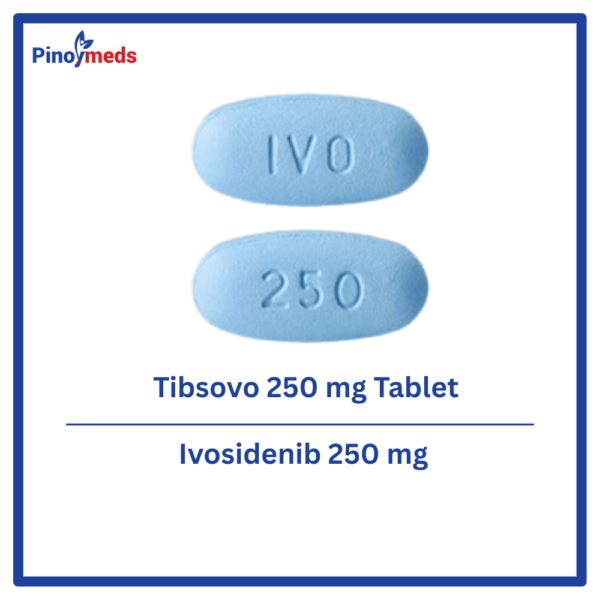
Ivosidenib is a synthetic, orally administered small molecule designed to selectively inhibit mutated IDH1 enzymes.
Its chemical structure features a trifluoromethyl group and a substituted phenyl ring, which contribute to its high binding affinity and selectivity for mutant IDH1 over the wild-type enzyme.
Structural Highlights:
- The molecule’s hydrophobic domains enhance its permeability across the cell membrane, thereby aiding its oral bioavailability.
- Designed to fit precisely into the active site of mutated IDH1 (especially R132H/C/G/S mutations).
- By occupying this site, ivosidenib blocks the conversion of isocitrate to the oncometabolite D-2-hydroxyglutarate (D-2HG).
This molecular precision underlies its ability to reprogram abnormal cancer metabolism and restore normal cell differentiation, making it a first-in-class therapy for IDH1-mutant cancers.
Discovery & Development
- Developed by Agios Pharmaceuticals and later commercialized by Servier
- Designed to target the IDH1 mutation driving cancers like acute myeloid leukemia (AML).
Approval & Regulatory Status
Ivosidenib (brand name: Tibsovo) has received multiple global regulatory approvals based on substantial clinical trial evidence supporting its safety and efficacy in IDH1-mutant cancers.
United States (U.S. FDA)
- July 2018: Initial approval for adults with relapsed or refractory acute myeloid leukemia (AML) harboring a susceptible IDH1 mutation, identified via an FDA-approved diagnostic test.
- May 2019: Granted breakthrough therapy designation for previously untreated AML in patients aged ≥75 years or those ineligible for intensive chemotherapy.
- August 2021: FDA expanded approval to include locally advanced or metastatic cholangiocarcinoma with IDH1 mutation after prior systemic therapy.
- June 2022: FDA approved Ivosidenib for relapsed or refractory myelodysplastic syndromes (MDS) with IDH1 mutations, making it the first targeted therapy for this rare condition.
Europe and Other Regions
- European Medicines Agency (EMA) and other global health authorities have authorized Ivosidenib for:
- Newly diagnosed AML in elderly or unfit patients.
- Unresectable or metastatic cholangiocarcinoma.
- Use within compassionate access programs for MDS and other off-label investigational studies.
Ivosidenib is recognized in clinical guidelines by international oncology bodies, including the National Comprehensive Cancer Network (NCCN) and European Society for Medical Oncology (ESMO).
Mode of Action
Ivosidenib is a targeted therapy designed to inhibit mutant forms of the isocitrate dehydrogenase-1 (IDH1) enzyme, which are found in several cancers, most notably AML, cholangiocarcinoma, and glioma.
Pharmacology
Pharmacokinetics
- Absorption: Oral tablets, peak concentration ~3 hours after dosing
- Distribution: High plasma protein binding (~92–96%)
- Metabolism: Primarily via CYP3A4
- Elimination: ~77% eliminated in feces, ~17% in urine; half-life ~93 hours
Pharmacodynamics
- Targets mutant IDH1, reversing abnormal metabolic and epigenetic programming to enable normal cell differentiation.
Bioavailability & Half-life
Its Uses
Ivosidenib is a targeted therapy approved for specific cancers driven by mutations in the IDH1 gene. Its precision makes it a valuable option in treating hard-to-treat cancers, especially in older adults or patients unable to tolerate intensive chemotherapy.
Primary FDA-Approved Uses
- Relapsed or Refractory Acute Myeloid Leukemia (AML) with IDH1 Mutation
- Indication: For adults whose AML has returned (relapsed) or no longer responds to treatment (refractory).
- Relevance: IDH1 mutations are present in approximately 6–10% of AML cases.
- Benefit: Offers a non-chemotherapy, targeted option with proven ability to induce remission.
- Indication: For adults whose AML has returned (relapsed) or no longer responds to treatment (refractory).
- Newly Diagnosed AML in Adults Aged ≥ 75 Years or Ineligible for Intensive Chemotherapy
- Usage: As monotherapy or in combination with azacitidine, a hypomethylating agent.
- Clinical Benefit: Improves survival and remission rates in older patients or those with comorbidities.
- Clinical Setting: Outpatient, oral treatment—ideal for frail patients.
- Usage: As monotherapy or in combination with azacitidine, a hypomethylating agent.
- Cholangiocarcinoma (Bile Duct Cancer) with IDH1 Mutation
- Indication: For adults with locally advanced or metastatic cholangiocarcinoma who have been treated with at least one prior systemic therapy.
- Background: IDH1 mutations occur in 10–20% of intrahepatic cholangiocarcinoma cases.
- Impact: Delays disease progression and offers an oral alternative to chemotherapy.
- Relapsed or Refractory Myelodysplastic Syndromes (MDS) with IDH1 Mutation
- Indication: For patients with MDS that has failed to respond to prior therapies.
- Approval: FDA granted this as a new indication in 2022, making Ivosidenib the first IDH1 inhibitor approved for MDS.
- Indication: For patients with MDS that has failed to respond to prior therapies.
Off‑Label & Emerging Uses
Though not yet approved for these conditions, Ivosidenib is being explored in a variety of investigational settings, especially where IDH1 mutations play a role in tumor growth:
- IDH1-Mutant Gliomas (Brain Tumors)
- Early trials show promise in slowing tumor progression and preserving neurological function.
- Clonal Hematopoiesis and Early Myeloid Malignancies
- Studies are evaluating whether targeting IDH1 mutations early can prevent disease progression.
- Other Solid Tumors
- Including colorectal, pancreatic, and breast cancers, though data are still preliminary.
Ongoing Clinical Trials
Phase 2 and 3 trials are actively investigating:
- Combination therapy strategies (e.g., Ivosidenib + azacitidine, venetoclax).
- Role in post-transplant maintenance for AML and MDS.
- Potential benefits in early-stage or minimal residual disease (MRD) settings.
How It Works
- Mutations in IDH1, particularly R132H, R132C, and other R132 substitutions, lead to the abnormal production of a cancer-promoting metabolite known as D-2-hydroxyglutarate (D-2HG).
- Elevated D-2HG blocks cell differentiation and alters gene regulation, contributing to cancer growth and persistence.
- Ivosidenib binds selectively and potently to the mutant IDH1 enzyme, thereby inhibiting its ability to convert α-ketoglutarate to D-2-hydroxyglutarate (D-2HG).
- As D-2HG levels fall, malignant cells resume normal maturation, reducing the leukemia cell burden and halting tumor progression.
This targeted mechanism not only offers precision therapy for IDH1-driven cancers but also limits toxicity by sparing normal, wild-type IDH1 activity in healthy cells.
Common Side Effects
Ivosidenib (Tibsovo®), like most cancer treatments, can cause side effects. While many are mild to moderate, some can be serious and require close monitoring by healthcare professionals. Patients need to understand what to expect and when to seek medical attention.
Blood & Immune System
- Differentiation Syndrome:
A potentially life-threatening complication that occurs when abnormal blood cells rapidly mature.
- Symptoms: Fever, difficulty breathing, low blood pressure, rapid weight gain, swelling, or fluid around the lungs/heart.
- Onset: Usually within the first few weeks of treatment.
- Action: Immediate medical attention is critical; corticosteroids may be used for management.
- Symptoms: Fever, difficulty breathing, low blood pressure, rapid weight gain, swelling, or fluid around the lungs/heart.
This condition is rare but serious. Patients and caregivers should be informed about early warning signs.
Cardiac Effects
- QT Interval Prolongation:
- A change in the heart’s electrical rhythm, which can lead to dangerous arrhythmias.
- Monitoring: Routine ECGs are recommended before and during treatment.
- Precaution: Avoid combining with other drugs known to prolong the QT interval, such as some antibiotics, antifungals, and antiarrhythmics.
- A change in the heart’s electrical rhythm, which can lead to dangerous arrhythmias.
Liver Function
- Elevated Liver Enzymes (ALT, AST):
- Indicates liver stress or damage.
- Monitoring: Regular blood tests are required.
- Management: Dose adjustment or temporary discontinuation may be necessary if levels rise significantly.
Gastrointestinal Side Effects
- Nausea
- Diarrhea
- Constipation
- Abdominal Pain
These are generally manageable with dietary adjustments and supportive medications. Staying hydrated is key.
Metabolic Effects
- Hyperglycemia (High Blood Sugar):
May require adjustments in diabetic medications.
- Electrolyte Imbalances:
Low potassium or magnesium levels can occur, especially in patients with vomiting or diarrhea.
General Side Effects
- Fatigue
- Rash
- Joint Pain
- Cough
- Swelling (Edema)
- Headache
These symptoms are often mild but can affect daily functioning. Patients should discuss persistent or worsening symptoms with their care team.
Clinical Trials & Approvals
The development and approval of Ivosidenib are backed by strong clinical evidence demonstrating its effectiveness in IDH1-mutant hematologic cancers and solid tumors. Regulatory decisions have been based on well-conducted Phase I to Phase III trials.
Phase I/II Trials – Acute Myeloid Leukemia (AML)
- Purpose: To assess safety, tolerability, and early efficacy of ivosidenib in patients with relapsed or refractory AML carrying an IDH1 mutation.
- Key Findings:
- Response Rate: Over 30% of patients achieved complete remission or partial response.
- Median Overall Survival: Approximately 9 months in heavily pretreated populations.
- D-2HG Reduction: A Marked decrease in the cancer-driving oncometabolite confirmed the drug’s biological effect.
- Response Rate: Over 30% of patients achieved complete remission or partial response.
- Impact: These results led to the FDA’s accelerated approval in July 2018 for R/R AML with IDH1 mutations.
Phase III AGILE Trial – Newly Diagnosed AML + Azacitidine
- Objective: To evaluate the combination of ivosidenib and azacitidine in newly diagnosed AML patients aged ≥75 or ineligible for intensive chemotherapy.
- Design: Randomized, double-masked, placebo-controlled.
- Results (published in NEJM, 2022):
- Median Overall Survival: 24 months with combination vs. 7.9 months with azacitidine alone.
- Complete Remission Rate: 47% with combination therapy.
- Benefit: Lower need for transfusions and delayed progression.
- Outcome: Supported expanded FDA approval and growing guideline recommendations for first-line use.
Cholangiocarcinoma Trials (Phase I/II)
- Study Focus: Patients with locally advanced or metastatic intrahepatic cholangiocarcinoma and confirmed IDH1 mutation.
- Findings:
- Disease Control Rate: ~51%
- Median Progression-Free Survival: 2.7 months; some patients responded for over 6 months.
- Relevance: These studies established Ivosidenib as a non-chemotherapy option for advanced bile duct cancer after prior treatment.
New & Emerging Indications
Several ongoing clinical trials are exploring the role of Ivosidenib in additional cancer settings:
- Myelodysplastic Syndromes (MDS):
Phase I/II trials have demonstrated durable responses in patients with relapsed or refractory MDS, resulting in FDA approval in 2022.
- Low-Grade Gliomas:
Investigational use in IDH1-mutated brain tumors with the potential to delay tumor progression and improve quality of life.
- Post-Transplant Maintenance Therapy:
Studies are assessing whether Ivosidenib can reduce relapse risk in AML/MDS patients following stem cell transplant.
- Combination Therapies:
Trials pairing Ivosidenib with venetoclax, enasidenib, or immune checkpoint inhibitors are ongoing to explore synergistic effects.
This information is for educational purposes only and should not replace professional medical advice. Always consult a healthcare provider for personalized diagnosis and treatment guidance.
Showing all 3 results
- - Information About the Molecule
- - Pharmacology
- - Its Uses
- - How It Works
- - Common Side Effects
- - Clinical Trials & Approvals
Last updated on 26-03-2026 22:17:20
Overview
- Synonyms: Tibsovo®, AG-120, Ivosidenib hydrochloride
- Chemical Classification: First-in-class isocitrate dehydrogenase-1 (IDH1) inhibitor
Information About the Molecule
- Molecular Formula: C₂₈H₂₂ClF₃N₆O₃
- Molecular Weight: Approximately 583.96 g/mol
- Chemical Class: Small-molecule inhibitor of isocitrate dehydrogenase 1 (IDH1)
Ivosidenib is a synthetic, orally administered small molecule designed to selectively inhibit mutated IDH1 enzymes.
Its chemical structure features a trifluoromethyl group and a substituted phenyl ring, which contribute to its high binding affinity and selectivity for mutant IDH1 over the wild-type enzyme.
Structural Highlights:
- The molecule’s hydrophobic domains enhance its permeability across the cell membrane, thereby aiding its oral bioavailability.
- Designed to fit precisely into the active site of mutated IDH1 (especially R132H/C/G/S mutations).
- By occupying this site, ivosidenib blocks the conversion of isocitrate to the oncometabolite D-2-hydroxyglutarate (D-2HG).
This molecular precision underlies its ability to reprogram abnormal cancer metabolism and restore normal cell differentiation, making it a first-in-class therapy for IDH1-mutant cancers.
Discovery & Development
- Developed by Agios Pharmaceuticals and later commercialized by Servier
- Designed to target the IDH1 mutation driving cancers like acute myeloid leukemia (AML).
Approval & Regulatory Status
Ivosidenib (brand name: Tibsovo) has received multiple global regulatory approvals based on substantial clinical trial evidence supporting its safety and efficacy in IDH1-mutant cancers.
United States (U.S. FDA)
- July 2018: Initial approval for adults with relapsed or refractory acute myeloid leukemia (AML) harboring a susceptible IDH1 mutation, identified via an FDA-approved diagnostic test.
- May 2019: Granted breakthrough therapy designation for previously untreated AML in patients aged ≥75 years or those ineligible for intensive chemotherapy.
- August 2021: FDA expanded approval to include locally advanced or metastatic cholangiocarcinoma with IDH1 mutation after prior systemic therapy.
- June 2022: FDA approved Ivosidenib for relapsed or refractory myelodysplastic syndromes (MDS) with IDH1 mutations, making it the first targeted therapy for this rare condition.
Europe and Other Regions
- European Medicines Agency (EMA) and other global health authorities have authorized Ivosidenib for:
- Newly diagnosed AML in elderly or unfit patients.
- Unresectable or metastatic cholangiocarcinoma.
- Use within compassionate access programs for MDS and other off-label investigational studies.
Ivosidenib is recognized in clinical guidelines by international oncology bodies, including the National Comprehensive Cancer Network (NCCN) and European Society for Medical Oncology (ESMO).
Mode of Action
Ivosidenib is a targeted therapy designed to inhibit mutant forms of the isocitrate dehydrogenase-1 (IDH1) enzyme, which are found in several cancers, most notably AML, cholangiocarcinoma, and glioma.
Pharmacology
Pharmacokinetics
- Absorption: Oral tablets, peak concentration ~3 hours after dosing
- Distribution: High plasma protein binding (~92–96%)
- Metabolism: Primarily via CYP3A4
- Elimination: ~77% eliminated in feces, ~17% in urine; half-life ~93 hours
Pharmacodynamics
- Targets mutant IDH1, reversing abnormal metabolic and epigenetic programming to enable normal cell differentiation.
Bioavailability & Half-life
Its Uses
Ivosidenib is a targeted therapy approved for specific cancers driven by mutations in the IDH1 gene. Its precision makes it a valuable option in treating hard-to-treat cancers, especially in older adults or patients unable to tolerate intensive chemotherapy.
Primary FDA-Approved Uses
- Relapsed or Refractory Acute Myeloid Leukemia (AML) with IDH1 Mutation
- Indication: For adults whose AML has returned (relapsed) or no longer responds to treatment (refractory).
- Relevance: IDH1 mutations are present in approximately 6–10% of AML cases.
- Benefit: Offers a non-chemotherapy, targeted option with proven ability to induce remission.
- Indication: For adults whose AML has returned (relapsed) or no longer responds to treatment (refractory).
- Newly Diagnosed AML in Adults Aged ≥ 75 Years or Ineligible for Intensive Chemotherapy
- Usage: As monotherapy or in combination with azacitidine, a hypomethylating agent.
- Clinical Benefit: Improves survival and remission rates in older patients or those with comorbidities.
- Clinical Setting: Outpatient, oral treatment—ideal for frail patients.
- Usage: As monotherapy or in combination with azacitidine, a hypomethylating agent.
- Cholangiocarcinoma (Bile Duct Cancer) with IDH1 Mutation
- Indication: For adults with locally advanced or metastatic cholangiocarcinoma who have been treated with at least one prior systemic therapy.
- Background: IDH1 mutations occur in 10–20% of intrahepatic cholangiocarcinoma cases.
- Impact: Delays disease progression and offers an oral alternative to chemotherapy.
- Relapsed or Refractory Myelodysplastic Syndromes (MDS) with IDH1 Mutation
- Indication: For patients with MDS that has failed to respond to prior therapies.
- Approval: FDA granted this as a new indication in 2022, making Ivosidenib the first IDH1 inhibitor approved for MDS.
- Indication: For patients with MDS that has failed to respond to prior therapies.
Off‑Label & Emerging Uses
Though not yet approved for these conditions, Ivosidenib is being explored in a variety of investigational settings, especially where IDH1 mutations play a role in tumor growth:
- IDH1-Mutant Gliomas (Brain Tumors)
- Early trials show promise in slowing tumor progression and preserving neurological function.
- Clonal Hematopoiesis and Early Myeloid Malignancies
- Studies are evaluating whether targeting IDH1 mutations early can prevent disease progression.
- Other Solid Tumors
- Including colorectal, pancreatic, and breast cancers, though data are still preliminary.
Ongoing Clinical Trials
Phase 2 and 3 trials are actively investigating:
- Combination therapy strategies (e.g., Ivosidenib + azacitidine, venetoclax).
- Role in post-transplant maintenance for AML and MDS.
- Potential benefits in early-stage or minimal residual disease (MRD) settings.
How It Works
- Mutations in IDH1, particularly R132H, R132C, and other R132 substitutions, lead to the abnormal production of a cancer-promoting metabolite known as D-2-hydroxyglutarate (D-2HG).
- Elevated D-2HG blocks cell differentiation and alters gene regulation, contributing to cancer growth and persistence.
- Ivosidenib binds selectively and potently to the mutant IDH1 enzyme, thereby inhibiting its ability to convert α-ketoglutarate to D-2-hydroxyglutarate (D-2HG).
- As D-2HG levels fall, malignant cells resume normal maturation, reducing the leukemia cell burden and halting tumor progression.
This targeted mechanism not only offers precision therapy for IDH1-driven cancers but also limits toxicity by sparing normal, wild-type IDH1 activity in healthy cells.
Common Side Effects
Ivosidenib (Tibsovo®), like most cancer treatments, can cause side effects. While many are mild to moderate, some can be serious and require close monitoring by healthcare professionals. Patients need to understand what to expect and when to seek medical attention.
Blood & Immune System
- Differentiation Syndrome:
A potentially life-threatening complication that occurs when abnormal blood cells rapidly mature.
- Symptoms: Fever, difficulty breathing, low blood pressure, rapid weight gain, swelling, or fluid around the lungs/heart.
- Onset: Usually within the first few weeks of treatment.
- Action: Immediate medical attention is critical; corticosteroids may be used for management.
- Symptoms: Fever, difficulty breathing, low blood pressure, rapid weight gain, swelling, or fluid around the lungs/heart.
This condition is rare but serious. Patients and caregivers should be informed about early warning signs.
Cardiac Effects
- QT Interval Prolongation:
- A change in the heart’s electrical rhythm, which can lead to dangerous arrhythmias.
- Monitoring: Routine ECGs are recommended before and during treatment.
- Precaution: Avoid combining with other drugs known to prolong the QT interval, such as some antibiotics, antifungals, and antiarrhythmics.
- A change in the heart’s electrical rhythm, which can lead to dangerous arrhythmias.
Liver Function
- Elevated Liver Enzymes (ALT, AST):
- Indicates liver stress or damage.
- Monitoring: Regular blood tests are required.
- Management: Dose adjustment or temporary discontinuation may be necessary if levels rise significantly.
Gastrointestinal Side Effects
- Nausea
- Diarrhea
- Constipation
- Abdominal Pain
These are generally manageable with dietary adjustments and supportive medications. Staying hydrated is key.
Metabolic Effects
- Hyperglycemia (High Blood Sugar):
May require adjustments in diabetic medications.
- Electrolyte Imbalances:
Low potassium or magnesium levels can occur, especially in patients with vomiting or diarrhea.
General Side Effects
- Fatigue
- Rash
- Joint Pain
- Cough
- Swelling (Edema)
- Headache
These symptoms are often mild but can affect daily functioning. Patients should discuss persistent or worsening symptoms with their care team.
Clinical Trials & Approvals
The development and approval of Ivosidenib are backed by strong clinical evidence demonstrating its effectiveness in IDH1-mutant hematologic cancers and solid tumors. Regulatory decisions have been based on well-conducted Phase I to Phase III trials.
Phase I/II Trials – Acute Myeloid Leukemia (AML)
- Purpose: To assess safety, tolerability, and early efficacy of ivosidenib in patients with relapsed or refractory AML carrying an IDH1 mutation.
- Key Findings:
- Response Rate: Over 30% of patients achieved complete remission or partial response.
- Median Overall Survival: Approximately 9 months in heavily pretreated populations.
- D-2HG Reduction: A Marked decrease in the cancer-driving oncometabolite confirmed the drug’s biological effect.
- Response Rate: Over 30% of patients achieved complete remission or partial response.
- Impact: These results led to the FDA’s accelerated approval in July 2018 for R/R AML with IDH1 mutations.
Phase III AGILE Trial – Newly Diagnosed AML + Azacitidine
- Objective: To evaluate the combination of ivosidenib and azacitidine in newly diagnosed AML patients aged ≥75 or ineligible for intensive chemotherapy.
- Design: Randomized, double-masked, placebo-controlled.
- Results (published in NEJM, 2022):
- Median Overall Survival: 24 months with combination vs. 7.9 months with azacitidine alone.
- Complete Remission Rate: 47% with combination therapy.
- Benefit: Lower need for transfusions and delayed progression.
- Outcome: Supported expanded FDA approval and growing guideline recommendations for first-line use.
Cholangiocarcinoma Trials (Phase I/II)
- Study Focus: Patients with locally advanced or metastatic intrahepatic cholangiocarcinoma and confirmed IDH1 mutation.
- Findings:
- Disease Control Rate: ~51%
- Median Progression-Free Survival: 2.7 months; some patients responded for over 6 months.
- Relevance: These studies established Ivosidenib as a non-chemotherapy option for advanced bile duct cancer after prior treatment.
New & Emerging Indications
Several ongoing clinical trials are exploring the role of Ivosidenib in additional cancer settings:
- Myelodysplastic Syndromes (MDS):
Phase I/II trials have demonstrated durable responses in patients with relapsed or refractory MDS, resulting in FDA approval in 2022.
- Low-Grade Gliomas:
Investigational use in IDH1-mutated brain tumors with the potential to delay tumor progression and improve quality of life.
- Post-Transplant Maintenance Therapy:
Studies are assessing whether Ivosidenib can reduce relapse risk in AML/MDS patients following stem cell transplant.
- Combination Therapies:
Trials pairing Ivosidenib with venetoclax, enasidenib, or immune checkpoint inhibitors are ongoing to explore synergistic effects.
This information is for educational purposes only and should not replace professional medical advice. Always consult a healthcare provider for personalized diagnosis and treatment guidance.
Related Posts:
No matching posts found.