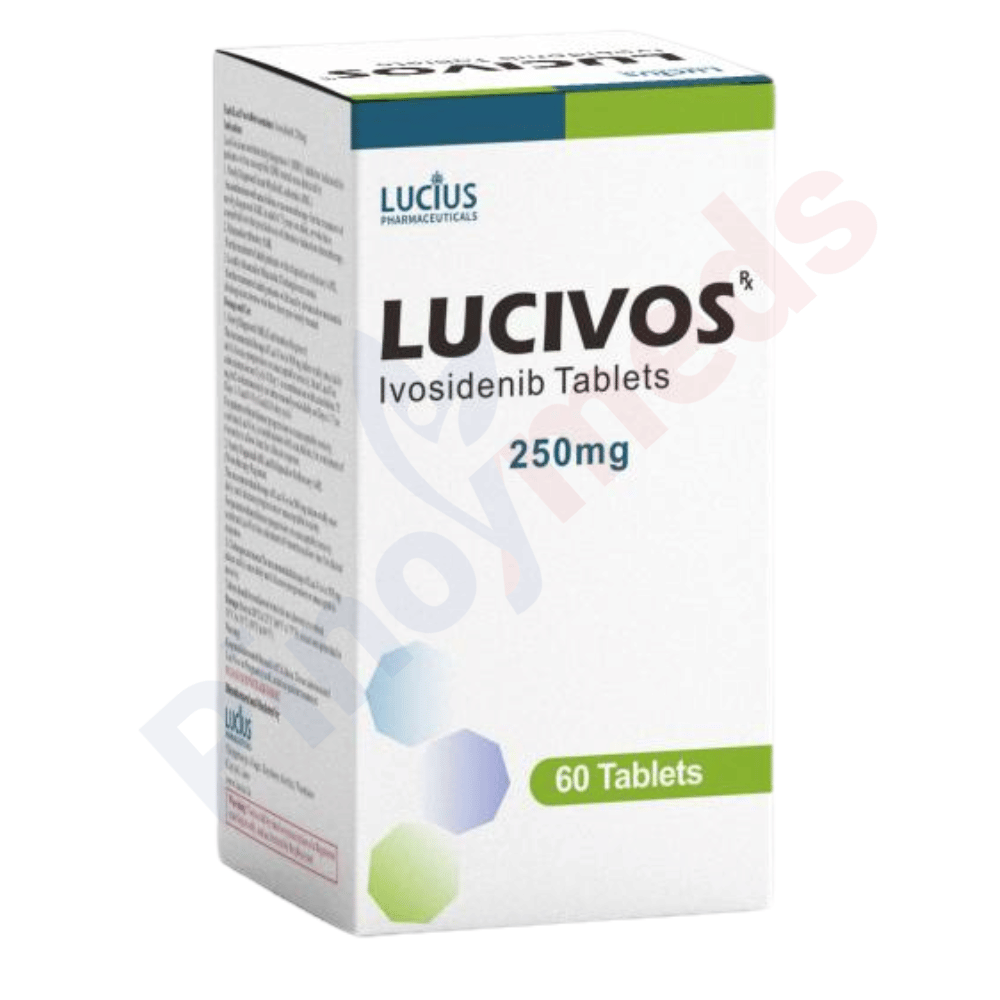
Lucivos 250 mg Tablet
Brand Name:
Molecule:
IvosidenibStrength:
Quantity:
Form:
Packaging Type:
Manufacturer/Marketed By:
Lucius PharmaCountry of Origin:
Enquiry Form
Similar Products:
| Product | Manufacturer / Marketed By | Price |
|---|---|---|
| Tibsovo 250 mg Tablet | Servier | Ask for Price |
| Ivosenib 250 mg Tablet | Everest Pharma | Ask for Price |
Description
LuciVos 500 mg Tablet is a once-daily, oral precision oncology treatment that contains ivosidenib, a first-in-class inhibitor of isocitrate dehydrogenase-1 (IDH1). This medication is specifically designed for patients with cancers harboring a susceptible IDH1 mutation, which plays a crucial role in promoting abnormal cell metabolism and inhibiting normal cell maturation. LuciVos directly targets the mutant IDH1 enzyme, which is found in various aggressive cancers, including acute myeloid leukemia (AML) and cholangiocarcinoma (also known as bile duct cancer). By correcting the underlying metabolic disturbance caused by this mutation, LuciVos helps to restore the natural process of cellular differentiation, transforming immature cancer cells into mature, functioning blood or tissue cells. This targeted approach makes LuciVos an integral part of personalized cancer therapy, offering both monotherapy and combination treatment options tailored to a patient's clinical profile.
Benefits
Molecular Precision
- LuciVos selectively inhibits the mutant IDH1 enzyme, reducing levels of the harmful oncometabolite 2-hydroxyglutarate (2-HG).
- This restores regular gene expression, enabling cancer cells to resume differentiation and helping reduce tumor burden without the need for broadly toxic chemotherapy.
Versatile Treatment Options
- Approved for use as monotherapy in relapsed or refractory AML and in patients ineligible for intensive chemotherapy.
- It can also be used in combination with azacitidine for the treatment of newly diagnosed AML, offering a flexible, less-intensive treatment pathway.
Oral, Once-Daily Dosing
- Administered as a single oral tablet per day, LuciVos offers convenience, independence, and ease of use, which is especially important for elderly or outpatient cancer patients.
- Supports home-based treatment, which can reduce hospital visits and improve long-term therapy adherence.
Clinically Proven Results
- Demonstrated improved overall survival and remission rates in multiple clinical trials for AML.
- The ClarIDHy trial also showed that LuciVos significantly improves progression-free survival in patients with previously treated IDH1-mutated cholangiocarcinoma.
How it Works
LuciVos (ivosidenib) is a targeted cancer therapy that works by inhibiting the activity of mutant isocitrate dehydrogenase-1 (IDH1), a genetic mutation found in several types of cancer, including acute myeloid leukemia (AML) and cholangiocarcinoma.
In its mutated form, IDH1 produces an abnormal metabolite called 2-hydroxyglutarate (2-HG). Excessive 2-HG disrupts normal cellular functions by:
- Blocking gene expression pathways that are necessary for healthy cell differentiation.
- Promoting an environment where immature cells remain “stuck” in a cancerous, proliferative state.
LuciVos Restores Normal Cell Function by:
- Inhibiting mutant IDH1 activity, thereby reducing the buildup of 2-HG.
- Reactivating normal cellular maturation, allowing cancer cells to develop into healthy, non-proliferative cells.
- Enabling the body’s natural mechanisms to control or eliminate cancerous cells is a therapeutic strategy known as differentiation therapy.
This mode of action differs from traditional chemotherapy, as it corrects the underlying cause of disease without broadly killing rapidly dividing cells, thereby reducing systemic toxicity.

Dosage & Administration
LuciVos should be prescribed and supervised by a healthcare provider with experience in treating cancers associated with IDH1 mutations. Genetic testing is required before initiating treatment.
For Newly Diagnosed AML (Ineligible for Intensive Chemotherapy)
Combination Regimen with Azacitidine:
- LuciVos Dose: 500 mg orally once daily (two 250 mg tablets), starting Cycle 1, Day 1.
- Azacitidine Dose: 75 mg/m² subcutaneously or intravenously:
- Administered on Days 1–7 of each 28-day cycle
- Alternate dosing schedule: Days 1–5 and 8–9, as clinically appropriate
Duration:
- Continue both LuciVos and azacitidine for a minimum of 6 months, even in the absence of immediate clinical improvement.
- Treatment should continue until disease progression or the development of unacceptable side effects.
Monotherapy Regimen
Applicable for:
- Newly diagnosed AML patients not receiving combination therapy
- Relapsed or refractory AML patients who have received prior treatment
- Dose: 500 mg orally once daily
- Administration: With or without food; take at the same time each day
- Duration: Continue treatment as long as clinical benefit is observed and no intolerable toxicity occurs
Side Effects
Like all targeted cancer therapies, LuciVos (ivosidenib) may cause side effects. While many are manageable, some may be serious and require immediate medical attention.
Common Side Effects (≥10% of patients)
These effects are typically mild to moderate and may improve over time or with supportive care:
- Fatigue – General tiredness or lack of energy
- Nausea – Occasional stomach upset
- Diarrhea or Constipation – Digestive irregularities
- Cough – Usually dry and non-productive
These symptoms should be reported if they persist or interfere with daily activities.
Serious Side Effects (<10% of patients)
These are less common but potentially life-threatening. Early detection and management are critical:
Differentiation Syndrome
- Caused by the rapid maturation of cancer cells
- Symptoms: Fever, shortness of breath, rapid weight gain, fluid retention, low blood pressure
- Treatment: Requires immediate corticosteroid therapy and possible interruption of LuciVos
QT Interval Prolongation
- A change in heart rhythm that can lead to arrhythmia
- Symptoms: Dizziness, fainting, palpitations
- Monitoring: Regular electrocardiograms (ECGs) are required
Electrolyte and Liver Abnormalities
- LuciVos can lower blood levels of potassium and magnesium, and increase liver enzymes (AST, ALT)
- Monitoring: Frequent blood tests are essential for early detection and dose adjustment
- Always report unusual or persistent side effects to your healthcare provider promptly.
Warning and Precaution
To ensure safe and effective treatment with LuciVos (ivosidenib), patients and healthcare providers should adhere to the following precautions:
Genetic Requirement
- Mandatory IDH1 Mutation Testing: LuciVos is effective only in cancers driven by a mutant IDH1 gene. A validated diagnostic test must confirm this mutation before initiating therapy.
Monitoring Requirements
- Electrocardiograms (ECG):
- Perform at baseline, on Days 8 and 15 of Cycle 1, and periodically throughout treatment to monitor for QT interval prolongation, which may signal heart rhythm abnormalities.
- Laboratory Monitoring:
- Regular blood tests are necessary to evaluate electrolyte balance (including potassium, magnesium, and calcium), liver function (as indicated by AST, ALT, and bilirubin levels), and complete blood counts (CBC).
- Adjustments to treatment may be needed based on results.
- Regular blood tests are necessary to evaluate electrolyte balance (including potassium, magnesium, and calcium), liver function (as indicated by AST, ALT, and bilirubin levels), and complete blood counts (CBC).
Drug Interactions
- Avoid using potent CYP3A4 inhibitors or inducers, such as:
- Inhibitors: Itraconazole, clarithromycin
- Inducers: Rifampin, phenytoin
- These can significantly alter ivosidenib levels, increasing toxicity risk or reducing effectiveness.
- Always inform your healthcare provider of all medications, supplements, or herbal products you are taking.
Pregnancy & Breastfeeding
- Pregnancy Warning: LuciVos may harm an unborn baby. Use effective contraception during therapy and for at least 1 month after the final dose.
- Breastfeeding: Avoid during treatment and for at least 1 week after stopping due to the potential for drug transfer through breast milk.
Patient Guidance
Proper storage ensures the safety and effectiveness of LuciVos:
- Store at 20°C to 25°C (68°F to 77°F) in a cool, dry place. Avoid excessive heat and humidity.
- Keep tablets in their original container with the desiccant packet. Do not transfer to other containers.
- Do not use tablets that are broken, chipped, or discolored.
- Do not flush unused tablets. Use a pharmacy take-back program or follow your pharmacist’s instructions for safe disposal.
- Keep out of reach of children and pets.
- Never share your medication, even with someone who has similar symptoms.
Clinical Trial & Approvals
Ivosidenib has been rigorously studied and approved based on key clinical trial data:
Acute Myeloid Leukemia (AML)
- FDA Approval (2018): For relapsed or refractory IDH1-mutant AML
- FDA Expansion (2019): For newly diagnosed AML patients ineligible for intensive chemotherapy, in combination with azacitidine
- Evidence: AGILE and earlier studies demonstrated improved remission rates, overall survival, and tolerability in elderly and frail patients
Cholangiocarcinoma
- FDA Approval (2021): For previously treated, IDH1-mutant locally advanced or metastatic cholangiocarcinoma
- Evidence: The ClarIDHy Phase 3 trial showed significantly better progression-free survival and a favorable trend in overall survival versus placebo
FAQ
Related Products
Lucirux Ruxolitinib 5 mg Tablet
Enquiry Form
Related Posts:
No matching posts found.

Reviews
Clear filtersThere are no reviews yet.