



Ustekinumab
What is Ustekinumab?
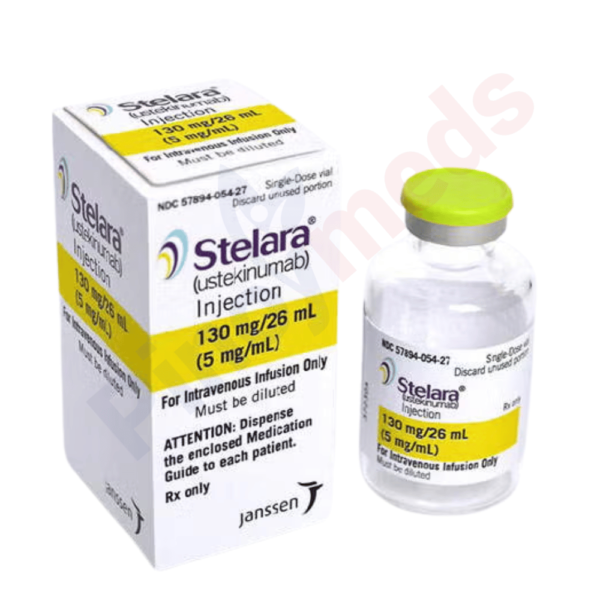
Ustekinumab is a fully human IgG1κ monoclonal antibody designed to block both interleukin‑12 (IL‑12) and interleukin‑23 (IL‑23) by binding their shared p40 subunit. This prevents their interaction with the IL‑12 receptor β1 on immune cells, inhibiting downstream Th1 and Th17 inflammatory pathways.
Approved Uses
Ustekinumab (brand name Stelara and biosimilars like Wezlana) is FDA-approved for:
-
Moderate–severe plaque psoriasis in adults and children (6+ years)
-
Psoriatic arthritis in adults and children (6+ years)
-
Crohn’s disease in adults
-
Ulcerative colitis in adults
Its indications extend to patients unresponsive or intolerant to conventional therapies.
Dosage & Administration
-
Psoriasis / Psoriatic arthritis: Typically, a subcutaneous (SC) injection every 8–12 weeks.
-
Inflammatory bowel disease (IBD): Begins with an intravenous (IV) induction dose, followed by SC maintenance doses.
Mechanism of Action
By targeting the p40 subunit, ustekinumab inhibits both IL‑12 and IL‑23 cytokine-driven immune responses. This reduces the activation of Th1/Th17 pathways, which play critical roles in the pathology of psoriasis, psoriatic arthritis, Crohn’s disease, and ulcerative colitis
Safety & Side Effects
Common adverse events:
-
Injection-site reactions, upper respiratory infections, headache, fatigue, and gastrointestinal discomfort.
Serious risks:
-
Increased risk of serious infections (e.g., tuberculosis, fungal, bacterial, viral), including rare lung inflammation.
-
Severe allergic reactions (e.g., anaphylaxis, facial swelling)
-
Avoid live vaccines during therapy and for 1 year before/after treatment due to diminished immune response.
Drug Interactions & Precautions
-
Avoid live vaccines (e.g., BCG, yellow fever, zoster, measles) during therapy and for 1 year before or after.
-
Combining ustekinumab with other immunosuppressants (e.g., methotrexate, azathioprine, biologics) increases infection risk and requires close monitoring.
Origin & Development
-
Developed by Centocor (now Janssen).
-
First FDA approval: September 2009 for moderate–severe plaque psoriasis
-
Later approvals include psoriatic arthritis (2013), Crohn’s disease (2016), and ulcerative colitis (2019).
-
Biosimilars like Wezlana now provide additional options.
Ustekinumab is a long-acting biologic targeting IL‑12/IL‑23, effectively treating several chronic inflammatory conditions. It offers dosing convenience but brings risks such as serious infections and immunosuppression, especially when combined with other therapies or following live vaccines.
Showing the single result
- - What is Ustekinumab?
- - Approved Uses
- - Dosage & Administration
- - Mechanism of Action
- - Safety & Side Effects
- - Drug Interactions & Precautions
- - Origin & Development
Last updated on 31-03-2026 23:21:37
Overview
What is Ustekinumab?
Ustekinumab is a fully human IgG1κ monoclonal antibody designed to block both interleukin‑12 (IL‑12) and interleukin‑23 (IL‑23) by binding their shared p40 subunit. This prevents their interaction with the IL‑12 receptor β1 on immune cells, inhibiting downstream Th1 and Th17 inflammatory pathways.
Approved Uses
Ustekinumab (brand name Stelara and biosimilars like Wezlana) is FDA-approved for:
-
Moderate–severe plaque psoriasis in adults and children (6+ years)
-
Psoriatic arthritis in adults and children (6+ years)
-
Crohn’s disease in adults
-
Ulcerative colitis in adults
Its indications extend to patients unresponsive or intolerant to conventional therapies.
Dosage & Administration
-
Psoriasis / Psoriatic arthritis: Typically, a subcutaneous (SC) injection every 8–12 weeks.
-
Inflammatory bowel disease (IBD): Begins with an intravenous (IV) induction dose, followed by SC maintenance doses.
Mechanism of Action
By targeting the p40 subunit, ustekinumab inhibits both IL‑12 and IL‑23 cytokine-driven immune responses. This reduces the activation of Th1/Th17 pathways, which play critical roles in the pathology of psoriasis, psoriatic arthritis, Crohn’s disease, and ulcerative colitis
Safety & Side Effects
Common adverse events:
-
Injection-site reactions, upper respiratory infections, headache, fatigue, and gastrointestinal discomfort.
Serious risks:
-
Increased risk of serious infections (e.g., tuberculosis, fungal, bacterial, viral), including rare lung inflammation.
-
Severe allergic reactions (e.g., anaphylaxis, facial swelling)
-
Avoid live vaccines during therapy and for 1 year before/after treatment due to diminished immune response.
Drug Interactions & Precautions
-
Avoid live vaccines (e.g., BCG, yellow fever, zoster, measles) during therapy and for 1 year before or after.
-
Combining ustekinumab with other immunosuppressants (e.g., methotrexate, azathioprine, biologics) increases infection risk and requires close monitoring.
Origin & Development
-
Developed by Centocor (now Janssen).
-
First FDA approval: September 2009 for moderate–severe plaque psoriasis
-
Later approvals include psoriatic arthritis (2013), Crohn’s disease (2016), and ulcerative colitis (2019).
-
Biosimilars like Wezlana now provide additional options.
Ustekinumab is a long-acting biologic targeting IL‑12/IL‑23, effectively treating several chronic inflammatory conditions. It offers dosing convenience but brings risks such as serious infections and immunosuppression, especially when combined with other therapies or following live vaccines.
Related Posts:
No matching posts found.