



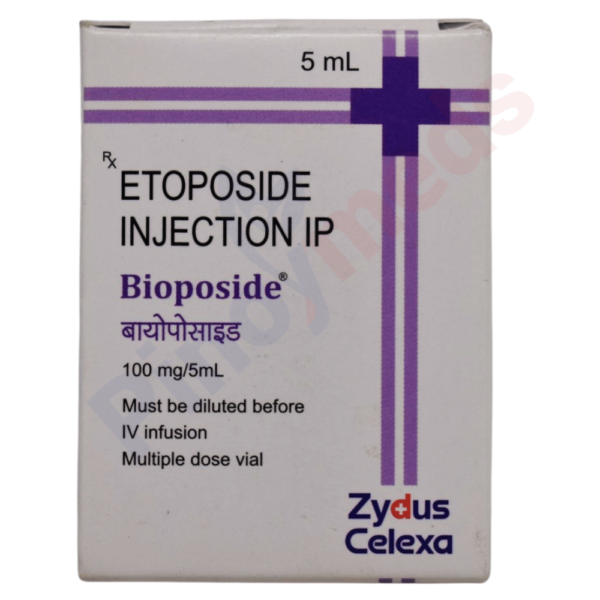
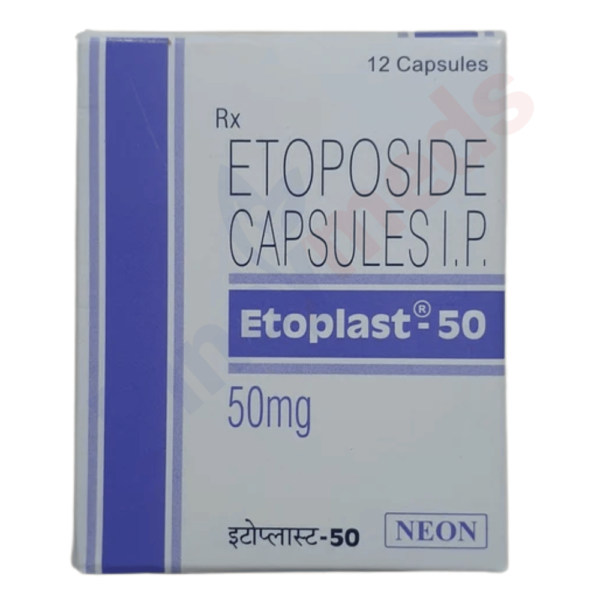
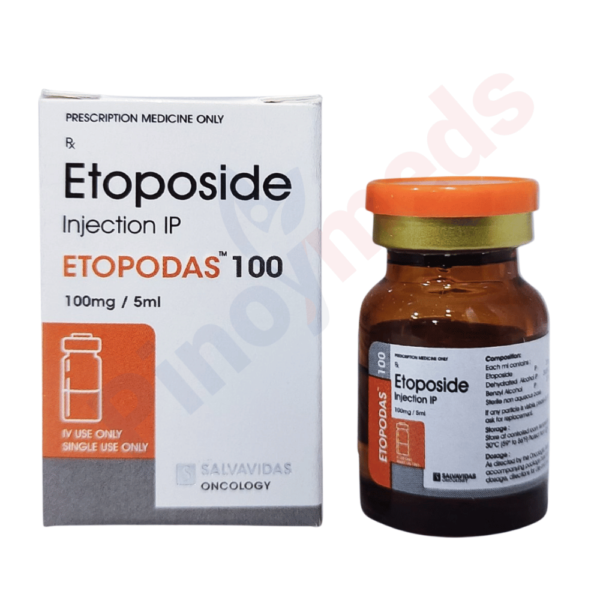
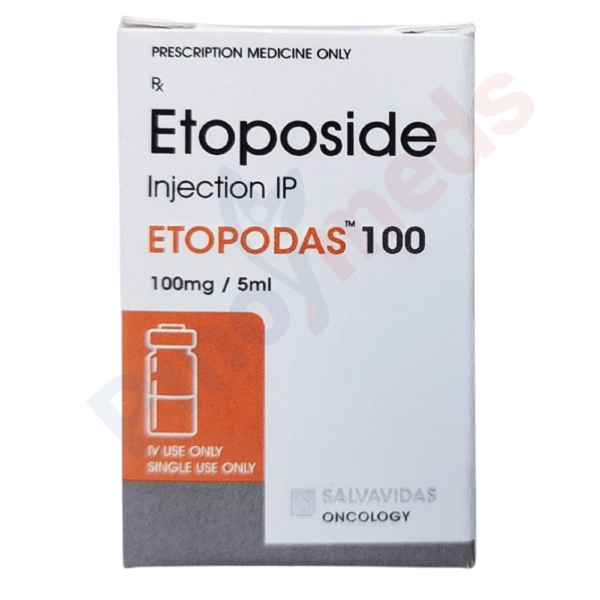
Etoposide
What is Etoposide?
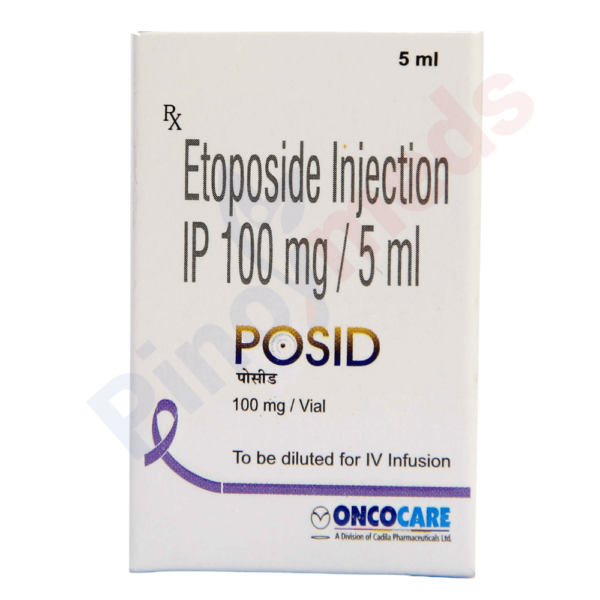
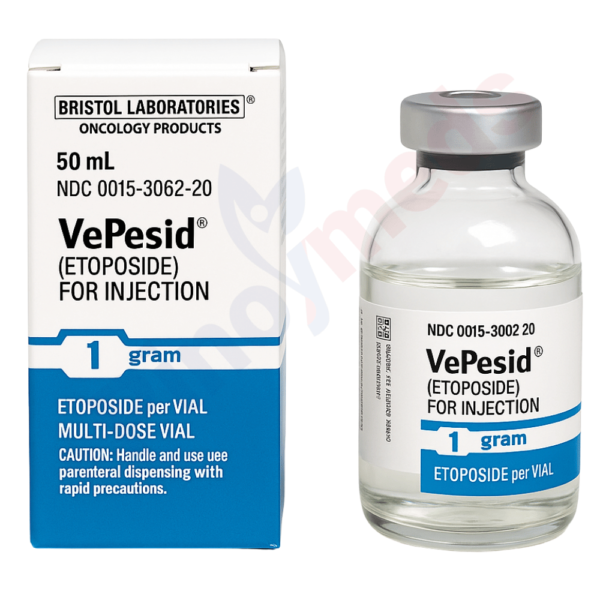
Etoposide is a chemotherapeutic agent and semisynthetic derivative of podophyllotoxin. It belongs to the topoisomerase II inhibitor class, binding the topoisomerase II complex to induce double‑stranded DNA breaks, leading to cell death in fast-dividing cancer cells, especially during the S and G2 phases of the cell cycle.
Approved Uses
-
Small cell lung cancer (SCLC) — first-line treatment in combination regimens.
-
Testicular cancer — post-surgical/chemotherapy refractory disease.
-
Other malignancies: lymphoma, leukemia, ovarian, bladder, gastric, testicular, neuroblastoma, glioblastoma, Kaposi’s sarcoma.
Administration & Dosage
-
Intravenous (IV) infusion over 30–60 minutes (must be slow to avoid hypotension)
-
Typical dose: 35–50 mg/m² daily × 4–5 days every 3–4 weeks for SCLC.
-
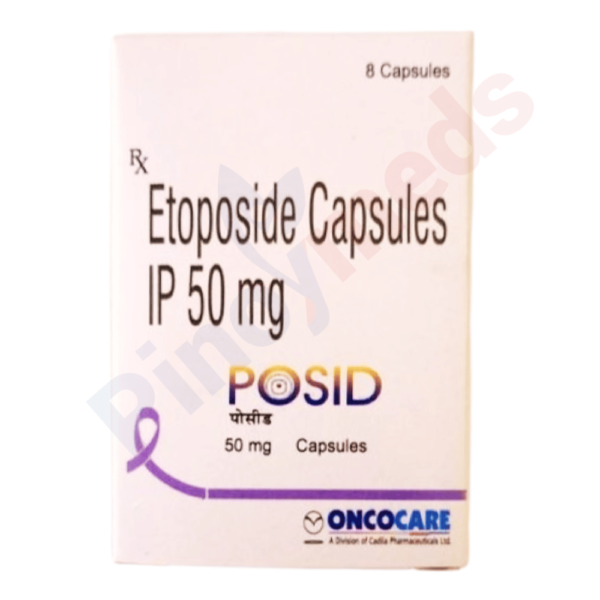
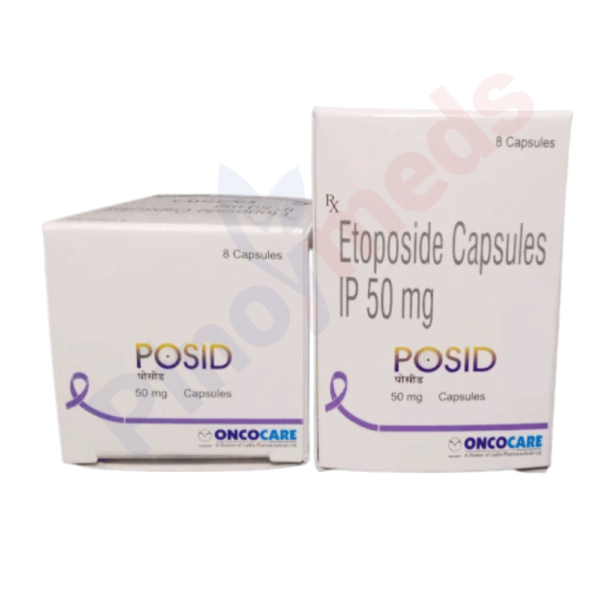
Oral capsules: variable bioavailability (25–75%), about twice the IV dose.
-
Monitoring: routine blood counts, renal/hepatic function before and during therapy.
Side Effects & Precautions
Hematologic Toxicity
-
Common bone marrow suppression: low WBC, RBC, platelets, risk of infection, anemia, bleeding.
Other Common Effects
-
Nausea, vomiting, mouth sores, diarrhea or constipation, hair loss.
-
Hypotension during infusion, infusion-site irritation, and a metallic taste.
Serious Risks
-
Secondary malignancy: risk of therapy-related leukemia.
-
Hypersensitivity reactions, severe skin reactions, seizures, liver toxicity
Special Precautions
-
Avoid use during pregnancy and breastfeeding (Pregnancy Category D)
-
Use caution with liver or kidney impairment and concurrent myelosuppressive or CYP3A4-modulating drugs .
-
Avoid live vaccines during treatment.
Pharmacokinetics
-
Bioavailability: 25–75% orally, 97% protein bound.
-
Half-life: ~6 hours (oral) to 6–12 hours (IV).
-
Metabolism and excretion: hepatic CYP3A4-mediated, renal, and fecal elimination.
Etoposide is a versatile topoisomerase II inhibitor utilized for various cancers. Its efficacy depends on precise dosing and vigilant monitoring, particularly for bone marrow suppression and infusion-related reactions.
Showing all 7 results


- - What is Etoposide?
- - Approved Uses
- - Administration & Dosage
- - Side Effects & Precautions
- - Pharmacokinetics - Faq
Last updated on 25-03-2026 15:41:13
Overview
What is Etoposide?
Etoposide is a chemotherapeutic agent and semisynthetic derivative of podophyllotoxin. It belongs to the topoisomerase II inhibitor class, binding the topoisomerase II complex to induce double‑stranded DNA breaks, leading to cell death in fast-dividing cancer cells, especially during the S and G2 phases of the cell cycle.
Approved Uses
-
Small cell lung cancer (SCLC) — first-line treatment in combination regimens.
-
Testicular cancer — post-surgical/chemotherapy refractory disease.
-
Other malignancies: lymphoma, leukemia, ovarian, bladder, gastric, testicular, neuroblastoma, glioblastoma, Kaposi’s sarcoma.
Administration & Dosage
-
Intravenous (IV) infusion over 30–60 minutes (must be slow to avoid hypotension)
-
Typical dose: 35–50 mg/m² daily × 4–5 days every 3–4 weeks for SCLC.
-
Oral capsules: variable bioavailability (25–75%), about twice the IV dose.
-
Monitoring: routine blood counts, renal/hepatic function before and during therapy.
Side Effects & Precautions
Hematologic Toxicity
-
Common bone marrow suppression: low WBC, RBC, platelets, risk of infection, anemia, bleeding.
Other Common Effects
-
Nausea, vomiting, mouth sores, diarrhea or constipation, hair loss.
-
Hypotension during infusion, infusion-site irritation, and a metallic taste.
Serious Risks
-
Secondary malignancy: risk of therapy-related leukemia.
-
Hypersensitivity reactions, severe skin reactions, seizures, liver toxicity
Special Precautions
-
Avoid use during pregnancy and breastfeeding (Pregnancy Category D)
-
Use caution with liver or kidney impairment and concurrent myelosuppressive or CYP3A4-modulating drugs .
-
Avoid live vaccines during treatment.
Pharmacokinetics
-
Bioavailability: 25–75% orally, 97% protein bound.
-
Half-life: ~6 hours (oral) to 6–12 hours (IV).
-
Metabolism and excretion: hepatic CYP3A4-mediated, renal, and fecal elimination.
Etoposide is a versatile topoisomerase II inhibitor utilized for various cancers. Its efficacy depends on precise dosing and vigilant monitoring, particularly for bone marrow suppression and infusion-related reactions.
Frequently Asked Questions
Why is blood monitoring essential during treatment?
Can I take live vaccines while receiving etoposide?
What should I do if I miss an oral dose?
Is there a risk of secondary leukemia?
Are oral and IV dosing interchangeable?
Related Posts:
Lung Cancer Treatment Options Explained: Surgery, Chemo, Targeted Therapy & More
Lung cancer treatment has advanced significantly over the years, offering patients more options and better outcomes than ever before. The
READ MORE »The Complete Guide to Lung Cancer: From Early Detection to Staging
Lung cancer is one of the most common and serious cancers worldwide. It often develops silently, with symptoms appearing only
READ MORE »Osimertinib (Tagrisso) for Lung Cancer: What You Need to Know
Introduction Lung cancer is one of the most common and deadly cancers globally. The most common type of lung cancer is non-small
READ MORE »